
The menú del peregrino is a fixed three-course dinner for about €10 to 15, bread and wine included, served early — usually 18:00 to 20:00, while normal Spanish restaurants do not start until 20:00. Each course offers two or three options: salad, soup, pasta or lentils, then pork, chicken or fish with chips, then flan or fruit. Our menú del peregrino guide has the prices in full.
The kitchen cooks a fixed list each day, so the animal products you cannot see cause more trouble than the ones you can: vegetable soup is often built on chicken stock, ensalada mixta arrives with tuna, and Galician caldo is thickened with unto, a cured pork fat. One right is worth knowing — under EU law a Spanish bar must declare which of the 14 listed allergens are in what it serves, plated food included. Ask for the lista de alérgenos.
Ask at check-in, not at dinner. Tell the hospitalero your restriction the moment you arrive, so the kitchen can buy or set aside something. If the one bar cannot feed you, walk to the shop before it shuts at 14:00, and carry one emergency dinner you never eat.
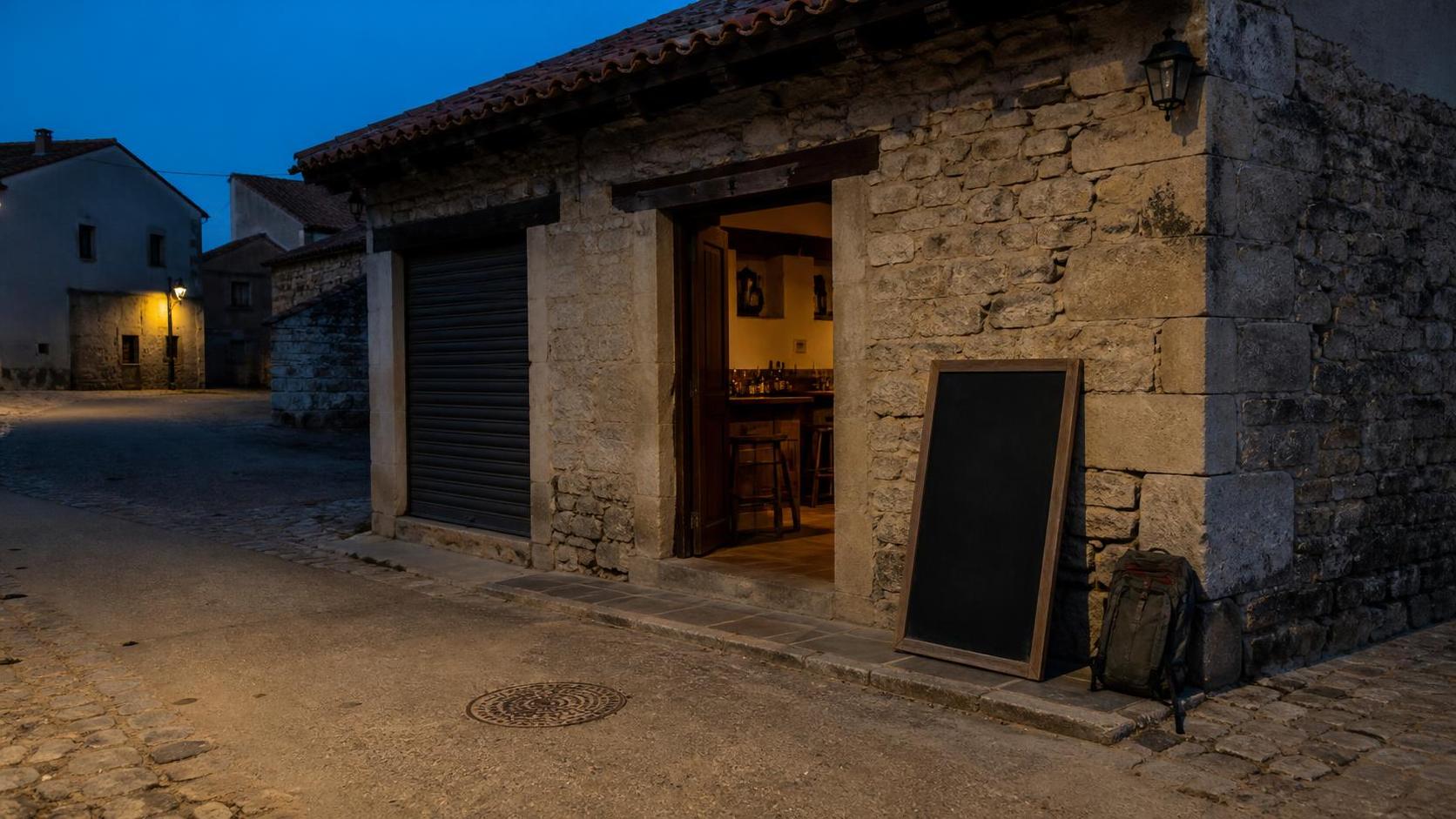
State it as a fact, not an apology, then ask something the hospitalero can act on: "Soy celíaca. ¿Hay algo que pueda cenar aquí, o me conviene comprar en la tienda antes de que cierre?" (I am celiac. Is there anything I can eat here, or should I buy at the shop before it closes?) The second half matters most: it gives the hospitalero permission to say no, worth far more at 14:00 than a polite maybe that dissolves at 20:00. Walking on to the next town is also legitimate — decide that in the morning, not at a locked door.
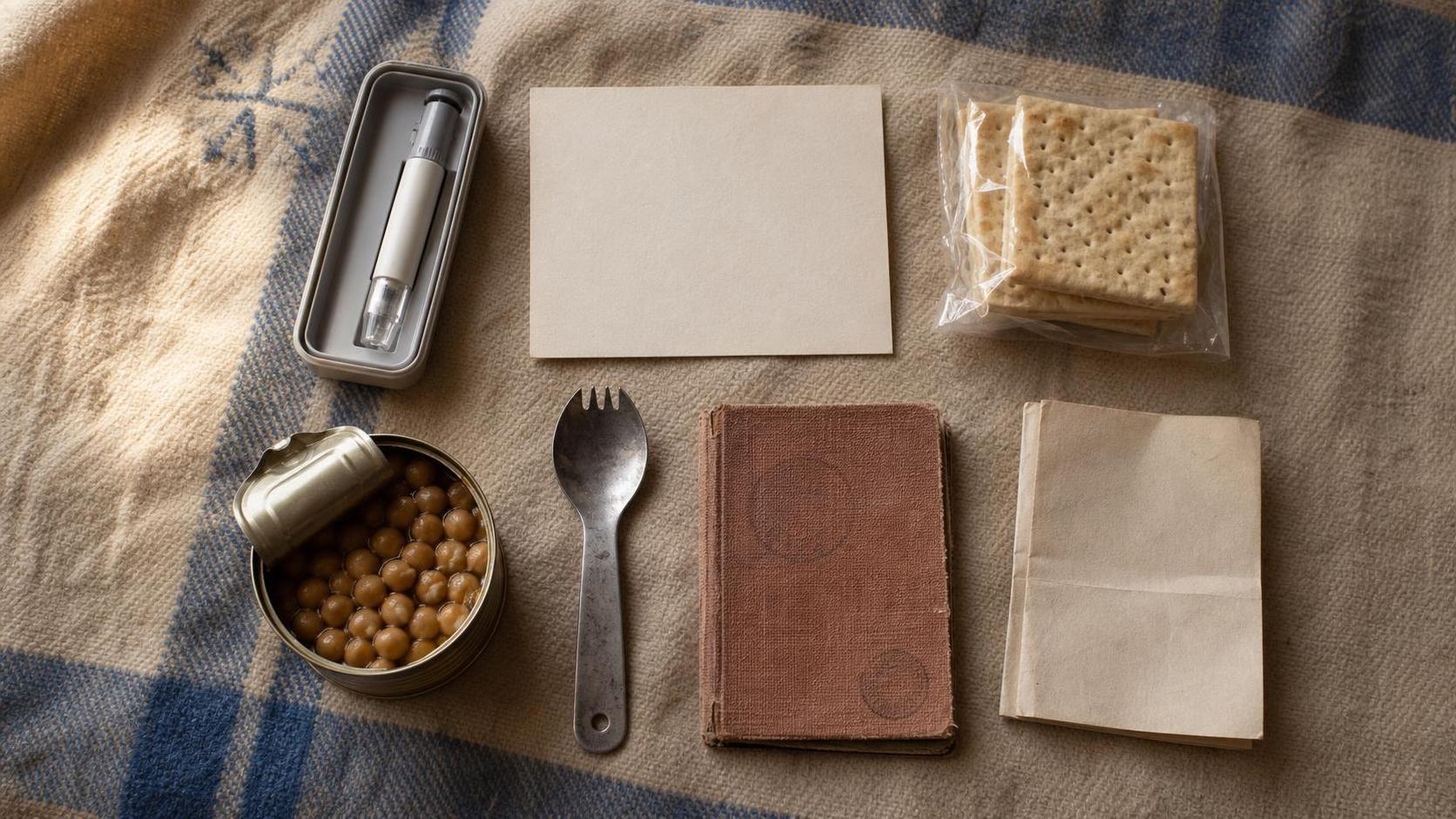
The emergency dinner you never open
One tin with a ring pull
Chickpeas, lentils or tuna. Protein that survives weeks in a side pocket.A carbohydrate you can eat cold
Gluten-free crackers, oatcakes, or sealed couscous.Fat and salt
Nuts, a sachet of olive oil, hard cheese.Something sweet
Dried fruit or chocolate, for the calories a bad day costs.Your own spork and knife
The cheapest cross-contact insurance there is.
Three channels feed you, and each fails differently. Restaurants are fast but fixed. Albergue kitchens give full control when the pots exist. Supermarkets are the only one you can stock in advance — so shop before you shower, because that window closes for good.
A municipal albergue kitchen is rarely what the word suggests. Some have a hob, an oven and donated pans; plenty have a sink, a microwave and a kettle. Ask at the desk before planning a meal around it. Where one works it is the best channel a restricted pilgrim has: you control every ingredient, dinner costs under €5, and you can cook early and lay foil down if you are celiac.
Communal and donativo dinners need the earliest warning of all. Whoever cooks bought the food that afternoon for a fixed number, so a restriction raised before the shopping run gets a separate plate and the same one raised at the table gets an apology. Say it when you sign up — the donativo tradition runs on that logic. Our supermarket strategy covers the chains; a gluten-free aisle exists in the large ones, not in a village shop.
Vegetarian food on the Camino Francés is solved on almost every stage: order two starters instead of a starter and a main. Vegan is a separate problem, because the reliable vegetarian fallbacks are egg and cheese. Tortilla, ensalada mixta and pimientos de padrón carry vegetarians through a whole route. Vegans need the supermarket.
Ordering two primeros is the accepted exception to the no-substitutions rule. Say "De primero la ensalada mixta, y de segundo otro primero, la menestra" and nobody blinks. Ask for the salad sin atún, because the default has tuna in it.
| Looks vegetarian | What is usually in it | Ask this |
|---|---|---|
| Ensalada mixta | Tuna, often a boiled egg | ¿Lleva atún? Sin atún, por favor |
| Sopa de verduras | Chicken or meat stock | ¿El caldo es de verduras o de carne? |
| Lentejas, fabada, cocido | Chorizo, morcilla, ham bone | ¿Lleva chorizo o hueso de jamón? |
| Caldo gallego | Unto (cured pork fat), lacón | Assume yes. It is the dish |
| Arroz, paella | Chicken or fish stock | ¿Lleva caldo de pollo o de pescado? |
| Pisto, revuelto, espinacas | Jamón stirred in at the end | ¿Lleva jamón? |
| Bread, pastries | Manteca de cerdo in village bakeries | ¿Lleva manteca? |
Vegans lose the two dishes that make that plan work. What is left in an ordinary bar is bread with tomato, olives, padrón peppers, chips, salad and fruit — a snack, not a dinner after 25 kilometres. So assemble your own most nights: tinned chickpeas and lentils are everywhere and cost almost nothing, and two tins with a bag of almonds covers a day's protein.
FACE, the Federación de Asociaciones de Celíacos de España, federates the regional associations and licenses the European Crossed Grain mark, the espiga barrada, which caps gluten at 20 mg/kg. Its own "Controlado por FACE" mark was folded into that European system in 2020 and is no longer issued, so the crossed ear of wheat is the symbol to look for. FACE also vets restaurants under FACE Restauración sin gluten, and its app — renamed CELIGUIA, formerly FACEMÓVIL — lists certified products and vetted venues. It is normally for members of a Spanish association, though visitors can request temporary access. The big chains carry gluten-free lines; Mercadona alone lists over 1,350 products. None of it covers the village bar with one fryer.
| Order this | Why it usually works | What makes it fail |
|---|---|---|
| Tortilla de patatas | Egg, potato, onion, olive oil | Some bars add flour; the shared plancha |
| Jamón serrano, queso | Cured meat and cheese | Cheap embutidos use wheat filler; the slicer |
| Pimientos de Padrón | Peppers, oil, salt | The fryer, shared with croquetas |
| Pulpo a la gallega | Octopus, potato, paprika, oil | Almost nothing. The safest hot plate in Galicia |
| Huevos fritos con patatas | Eggs and potatoes | The fryer again, every time |
| Gazpacho | Vegetables | It normally contains bread. Not safe |
Reading a label takes three phrases. Sin gluten is the legal gluten-free claim, apto para celíacos means suitable for celiacs, and puede contener trazas de gluten means a shared production line. Allergens are printed in bold inside the ingredient list, so you can scan for emphasis without reading Spanish. Watch for harina de lupino, lupin flour, a wheat extender that is itself a listed allergen.
Certified halal food in northern Spain exists in the cities and effectively nowhere between them. Kosher supervision on the route is absent; the nearest certified kitchens are in Madrid and Barcelona. Both diets run one fallback: order vegetarian or fish, cook where you can, stock up in the cities. The geography is the problem — the cities sit far apart, and between them the supply is a village bar and four shelves.
Decoding pork is the daily skill, because Spanish cooking uses it where other cuisines would not and the word "cerdo" appears in almost none of the names.
| On the menu | What it is |
|---|---|
| Jamón serrano, ibérico, york | Cured ham, cured ham, cooked ham |
| Lomo, panceta, tocino, beicon | Loin, belly, back fat, bacon |
| Chorizo, salchichón, morcilla | Cured and blood sausages |
| Lacón, codillo, secreto, presa | Cuts of pork by name, common in Galicia |
| Embutidos, fiambres | Cured meats and cold cuts as a category |
| Manteca de cerdo, unto | Lard, and the fat that thickens Galician caldo |
Say "No como cerdo" and you will be understood, but it does not cover stock and fat, so add "¿Lleva jamón, chorizo o manteca?" In a village the reliable order is eggs, cheese, salad, chips, tinned fish, pulses and bread. Ramadan changes the shape of the day rather than the menu: the fast breaks around sunset and albergues lock up soon after, so buy the meal in the afternoon and start before first light.
An intolerance is a bad night. An allergy is an ambulance. The danger is rarely the dish you were told about; it is the shared fryer, the tongs across the pintxos counter, and the albergue chopping board.
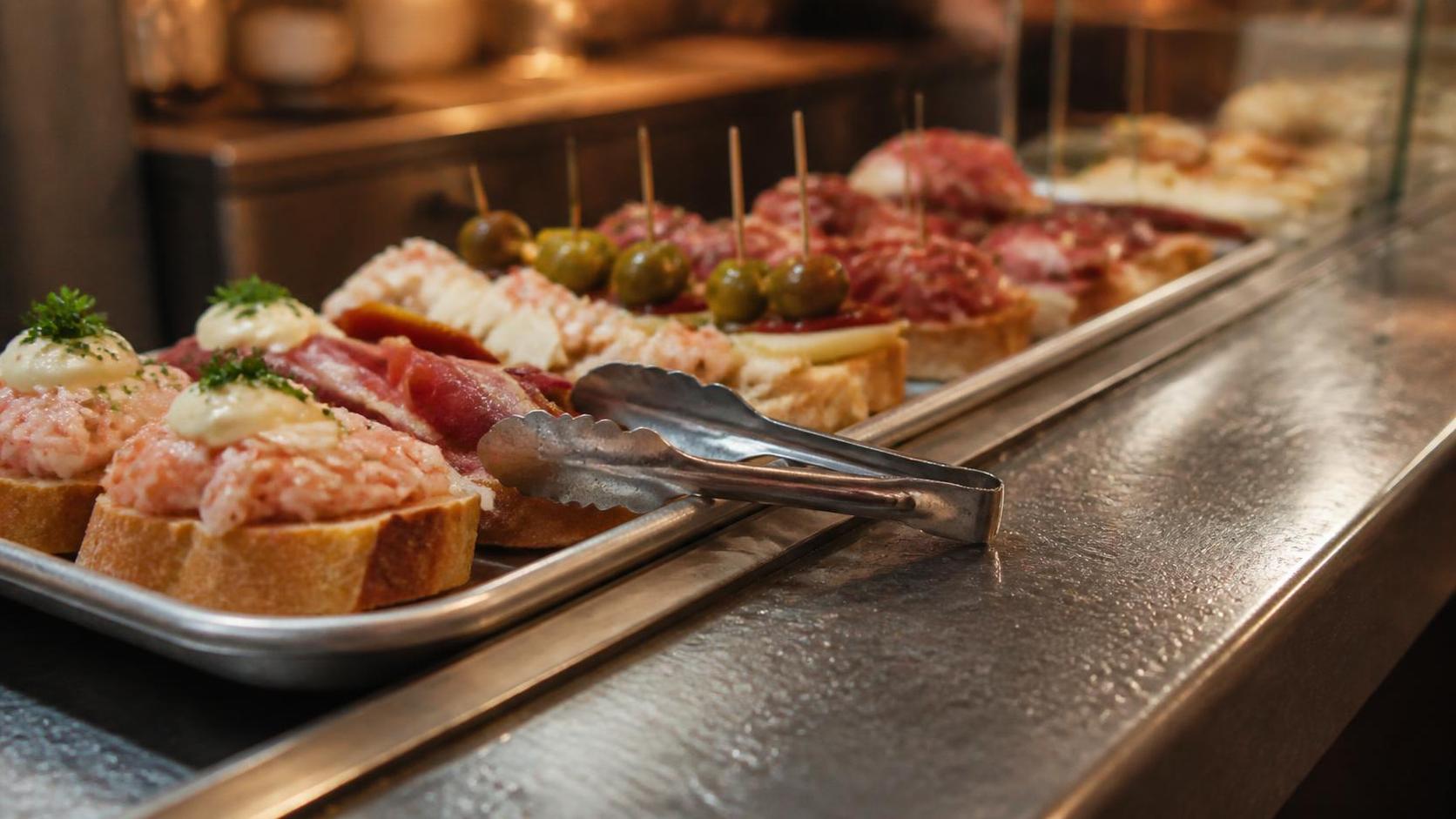
Lead with the word alergia, not a preference. Spanish kitchens take allergies seriously and fussiness less so, and the two are ordered with different sentences.
| Say this | It means |
|---|---|
| Tengo alergia a los frutos secos. Es grave. | I have a nut allergy. It is serious. |
| Soy alérgico / alérgica a los cacahuetes, el marisco, el huevo. | I am allergic to peanuts, shellfish, egg. |
| ¿Me puede enseñar la lista de alérgenos? | Can you show me the allergen list? |
| ¿Se fríe en el mismo aceite? | Is it fried in the same oil? |
| ¿Usan el mismo cuchillo o la misma tabla? | Do you use the same knife or board? |
| Estoy teniendo una reacción alérgica grave. | I am having a severe allergic reaction. |
| Mi autoinyector de adrenalina está en mi mochila. | My adrenaline auto-injector is in my backpack. |
| Inyéctela en la parte externa del muslo. | Inject it into my outer thigh. |
| Llame al 112, es una emergencia. | Call 112, it is an emergency. |
Carry those on a printed card as well as on your phone: the person cooking is usually not the person who took your order. Say autoinyector de adrenalina rather than a brand name or "pen" — that is the term on Spanish medicine labelling, and the one a paramedic recognises.
Bring your auto-injectors in hand luggage with the pharmacy label and a doctor's letter, and bring at least two. They are prescription-only in Spain and no farmacia may sell one over the counter. The devices registered there are Altellus, Jext and Anapen — EpiPen is not marketed in Spain at all. An EU or EEA prescription is valid in a Spanish pharmacy, but only in the cross-border format: your name and date of birth, the drug by its generic name (adrenalina, not the brand), and the prescriber's name, qualification, contact, work address including country, and signature. Non-EU prescriptions, the UK included, are not accepted. Our first aid kit guide covers the rest.
If it goes wrong, the number is 112: free, 24 hours, any phone, anywhere in Spain. It is answered by 19 regional call centres rather than one national desk, so language support varies. In Castilla y León, which covers most of the Francés, it is formally staffed in English, French, German and Portuguese; elsewhere operators generally speak English or can find an interpreter, but nothing guarantees it. Say your location first, then ask for una ambulancia and say reacción alérgica grave. Out of hours every pharmaceutical zone runs a compulsory farmacia de guardia rota, posted on each pharmacy door — in rural stretches, possibly the next town.
Timing decides whether you eat. Say it at check-in, confirm again when you book the communal dinner, and shop in the morning, because village shops keep split hours and close for a few hours in the early afternoon.
| When | What is still possible | What to say |
|---|---|---|
| The night before, on a thin stage | Everything. Call ahead, or sleep elsewhere | ¿Tienen cena? Soy celíaco, ¿es posible? |
| On arrival, 13:00 to 15:00 | The kitchen can still buy; the shop may be open | Name the restriction, then ask about the shop |
| Before the shop shuts, around 14:00 | Self-catering, and restocking the emergency dinner | Nothing. Just go |
| When you pay for the communal dinner | A separate plate, if the cook has not shopped | Confirm it a second time |
| At the table, 20:00 | Bread, salad, chips, an omelette if lucky | Ask anyway, and accept the answer |
Spanish shop hours are set by the owner, not by law, so treat any timetable as habit rather than rule. The usual village pattern is open until about 14:00, shut two or three hours, then open again from around 16:30 or 17:00 until 20:00 or 20:30. Sunday is the one people get wrong: a small tienda is legally free to open and mostly chooses not to, while a full-size supermarket really is restricted, since each region authorises only about ten Sundays and holidays a year and barely any fall in the walking season. Bars, bakeries and petrol stations are exempt.
The second confirmation earns its row: a restriction mentioned at reception often does not reach the person cooking, and repeating it when money changes hands is how it gets written down. On stages with a single albergue, book ahead and say it on the phone; albergue etiquette applies to the kitchen too.
A menú del peregrino runs about €10 to 15. A self-catered albergue dinner lands under €5. Budget €25 to 30 a day if you eat out with a restriction, or €15 to 20 if you cook.
| Restriction | Menú del peregrino | One-bar village stage | Albergue kitchen | Supermarket resupply | Typical day |
|---|---|---|---|---|---|
| Vegetarian | Two primeros, works nearly everywhere | Tortilla, salad, chips, eggs | Easy | Easy everywhere | €20–28 |
| Vegan | Salad, chips, bread. Thin | Often nothing hot | The main channel | Good in towns, poor in villages | €18–25 |
| Celiac | Naturally GF plates, fryer permitting | Risky. Cold food is safer | Good, if you clean first | Full range in big chains | €25–32 |
| Halal | Fish, eggs, cheese, vegetables | Vegetarian order | Full control | Certified meat in cities only | €20–28 |
| Kosher | Not available | Not available | Full control | Packaged goods only | €20–28 |
| Nut or severe allergy | Only with the allergen list | Ask, then decide | Safest channel | Read every label | €22–30 |
The substitution is where the money goes, and Spain has numbers for it. FACE prices a gluten-free basket every year, and its 2026 report puts the extra cost at €996 a year per person, about €83 a month. Per 100 grams that basket costs €27.09 gluten-free against €11.88 standard, and gluten-free bread runs roughly five times a normal barra. So the cheapest way to eat is also the safest: pulses, salad, bread or crackers, oil and fruit. Our eating on the Camino guide sets food beside the bed, which costs more.
FAQ
What do I say in Spanish to order safely with a food allergy?
Lead with the word alergia, not preference. Say: Tengo alergia a los frutos secos, es grave. ¿Me puede enseñar la lista de alérgenos? (I have a nut allergy, it is serious. Can you show me the allergen list?) Restaurants in Spain must provide that allergen information, in writing if you ask. Follow up with the cross-contact question that actually changes the plate: ¿Se fríe en el mismo aceite? (Is it fried in the same oil?). Carry the same sentences printed on a card, because the person cooking is often not the person who took your order.
Can I eat halal or kosher on the Camino Francés outside the big cities?
Certified, no. Practically, yes, by switching to a vegetarian order. Certified halal restaurants and butchers exist in the cities on the route and essentially disappear on the rural stages between them. Kosher supervision does not exist anywhere on the route; the nearest certified kitchens are in Madrid and Barcelona. Most observant pilgrims eat vegetarian or fish on trail, stock up in the cities, and treat egg, cheese, pulses and tinned fish as the daily base. Watch for lard and cured pork hidden in soups, stews and Galician caldo.
Will an albergue cook something separate for my dietary restriction?
Sometimes, if you ask at check-in. Communal dinners are bought that afternoon, so a restriction raised at 14:00 is usually accommodated and the same one at 20:00 is not. Private albergues are more flexible than municipal ones. Confirm twice: at check-in and when you pay.
Is the shared albergue kitchen safe if I have celiac disease?
Treat it as contaminated by default: one chopping board, one colander and a toaster used by twenty people with bread. Cook early, wash and dry everything yourself, use foil on shared surfaces, boil pasta in fresh water and never reuse a strainer. With no pots, cold packaged food is safer.
Can I bring my own food and my auto-injector into Spain?
Packaged shelf-stable food is fine from within the EU; meat and dairy from outside it are barred. Bring auto-injectors in hand luggage with the pharmacy label and a doctor's letter, and bring spares: they are prescription-only, and the devices sold in Spain are Altellus, Jext and Anapen, not EpiPen. An EU or EEA prescription works if it names the drug generically as adrenalina; a non-EU one does not.
What do I do if the only bar in the village is closed when I arrive?
This is the case the emergency dinner exists for. Check the albergue's vending machine or shop shelf, ask the hospitalero whether the bar opens later or another group is cooking, and otherwise eat what you carry and shop first thing next morning.
External citations
Regulation (EU) No 1169/2011 on food information to consumers (EUR-Lex)
eur-lex.europa.eu/legal-content/EN/TXT/?uri=CELEX%3A32011R1169The basis for your right to allergen information in any Spanish bar, and the source of the 14 listed allergens.
Real Decreto 126/2015, alimentos sin envasar (BOE, Spain)
www.boe.es/buscar/act.php?id=BOE-A-2015-1985Applies that duty to unpackaged food, which puts the allergen folder behind a village bar counter.
FACE, Informe de precios 2026
celiacos.org/tratamiento/informe-de-preciosThe annual gluten-free basket survey behind the €996 figure, from the federation licensing the espiga barrada.
AEMPS, CIMA registry of authorised medicines
cima.aemps.es/cima/publico/home.htmlConfirms Altellus, Jext and Anapen as the auto-injectors marketed in Spain, all prescription-only, and EpiPen absent.
Ley 1/2004, de horarios comerciales (BOE, Spain)
www.boe.es/buscar/act.php?id=BOE-A-2004-21421Leaves opening hours to the trader and frees shops under 300 m² from Sunday restrictions.
Gobierno de España, emergency numbers and the 112 service
administracion.gob.es/pag_Home/en/Tu-espacio-europeo/derechos-obligaciones/ciudadanos/asistencia-sanitaria/numeros-urgencia.htmlConfirms 112 works throughout Spain, via 19 separate regional services.
La Compostela del Lector
You walked this guide to Santiago.
All 771 km, 0 stages, stamped end to end.