
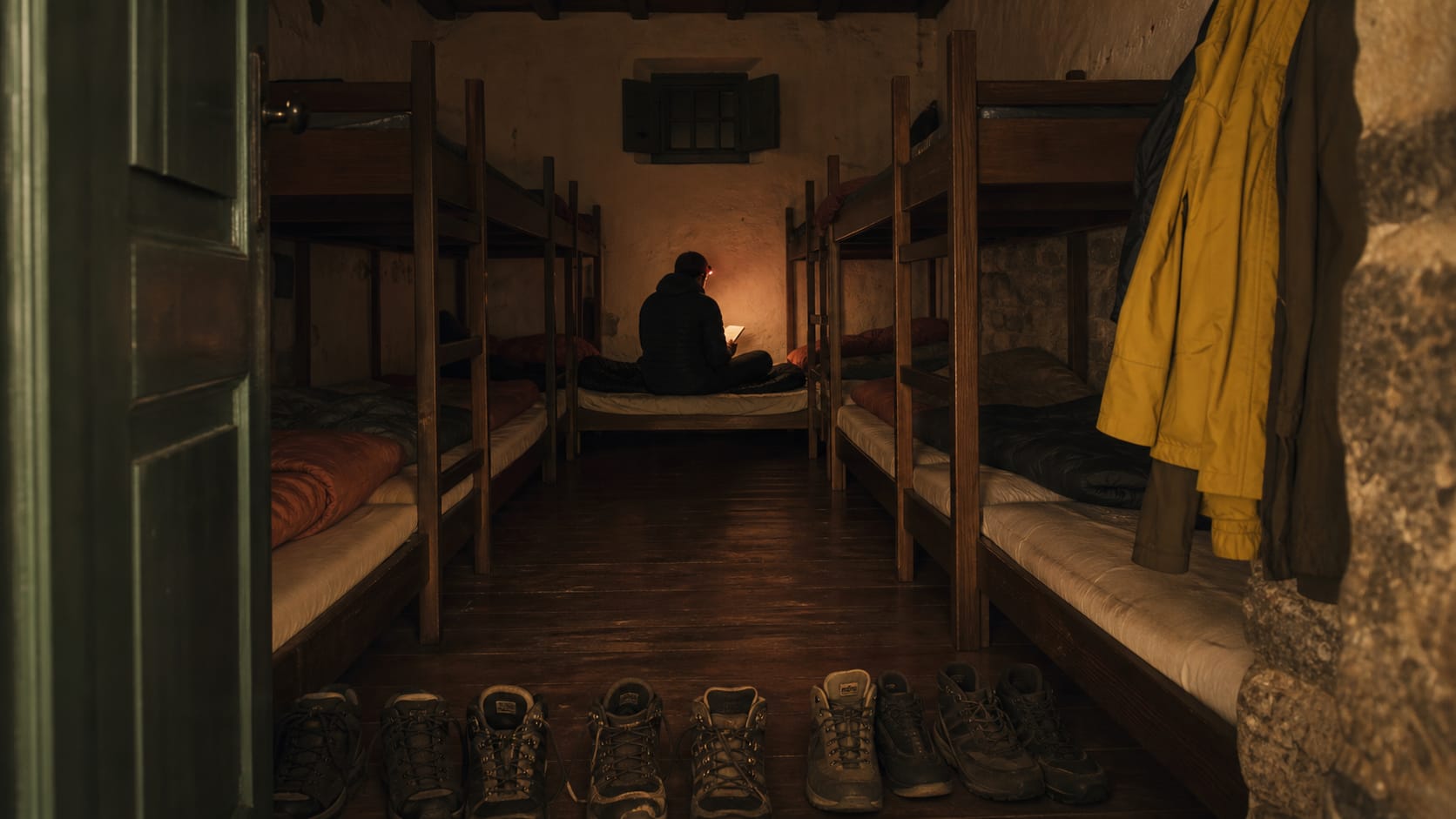
The albergue runs on courtesy, not on rules posted on a wall. Five habits carry most of it: respect the roughly 10 pm lights-out and the pre-dawn quiet, pack your bag the evening before, use a red-light headlamp instead of the room switch, keep your backpack off the mattresses, and leave the kitchen, bathroom, and your bunk area as you found them. Do those and you fit in anywhere from a 12-bed parish house to a 100-bed municipal.
None of it is complicated and none of it is written down. A pilgrim albergue is a shared bedroom for strangers who walked 25 kilometres and will wake before dawn to do it again. Most of the 300-plus albergues on the popular routes give you a bunk and little else: no towel, often no blanket, so you carry a sleeping bag or liner. You show your credencial at check-in, take the bed you are given, and for one night you share close quarters with people whose sleep matters as much as yours. That is the whole etiquette in a sentence: protect other people's rest the way you want them to protect yours.
If you are still deciding what kind of place to sleep in, our guide to Camino albergues covers the whole system, and the breakdown of albergue types explains how a municipal, private, and donativo each feel different at night.
Most albergues set lights-out around 10 pm and expect near-silence in the sleeping room until people begin waking near 6. Check-in usually opens between 1 and 4 pm; checkout is early, commonly by 8 or 8:30 am, because the hospitalero needs to clean before the next wave arrives. Between lights-out and first light, treat the dorm as a library where everyone is asleep.
In practice that means no conversations in the sleeping room after dark. Take phone calls, packing questions, and late arrivals into the hallway or common room. Set your alarm to vibrate and keep the phone under your pillow. And handle anything that crinkles with care, because the loudest sound in any dorm is a plastic bag. More on that below.
The etiquette shifts across the evening. What is fine at 6 pm is rude at 6 am. This table maps the three moments that matter most.
| Moment | Do | Don't | Why it matters |
|---|---|---|---|
| Evening (check-in to lights-out) | Shower and claim your bunk early, hang laundry, prep tomorrow's pack, eat in the kitchen or common room | Spread your gear across empty beds, run the washer at 9 pm, hold loud calls in the dorm | Everyone is settling in; the room fills and winds down together |
| Overnight (lights-out to ~6 am) | Wear earplugs and a sleep mask, use a vibrate alarm, move quietly in socks | Flip the ceiling light, rustle plastic bags, take a snorer's nudge personally | This is the sleep that gets people to Santiago; one careless person wakes twenty |
| 5 AM departure | Carry your pre-packed bag to the hall, dress and lace boots outside the room, aim a red headlamp low | Turn on the room lights, pack on your bunk, clatter poles and buckles | Half the room is still asleep and has every right to be |
Snoring is the dorm's oldest problem and it has a cheap fix: earplugs are the best few euros you will spend on the whole Camino. A pack of foam plugs and a sleep mask turn a 40-bed room into somewhere you can actually sleep, and together they weigh nothing.
If you are the snorer, you already know, and nobody blames you for it. What you can do: skip the extra wine at dinner, try a nasal strip or an antihistamine if congestion is the cause, and on your worst nights take a private room instead of the dorm. That is not a retreat, it is a kindness, and hostels, pensions, and private rooms exist partly for exactly this. If someone gives you a gentle nudge at 2 am, read it as information, not an insult. Everyone in that room has been on one side of it or the other.
If
You can block it out
If
You need to act
If
It happens every night
The single kindest thing you can do in a dorm is get your bag ready before lights-out. Lay tomorrow's clothes on top, close the noisy zips, sort your gear into soft pouches instead of plastic bags, and leave out only the layer you will sleep in. Then at dawn you lift a finished pack and walk out, instead of assembling it in the dark over sleeping heads.
The crinkle of a supermarket bag at 5 am is the number-one noise complaint in pilgrim albergues, ahead of snoring, because snoring is involuntary and the bag is not. Move any packing you cannot finish quietly into the hallway. Skip the overhead light entirely. Lace your boots sitting on the bench by the door, never on your bunk. A departure done well is almost silent, and the people still sleeping will never know you left.
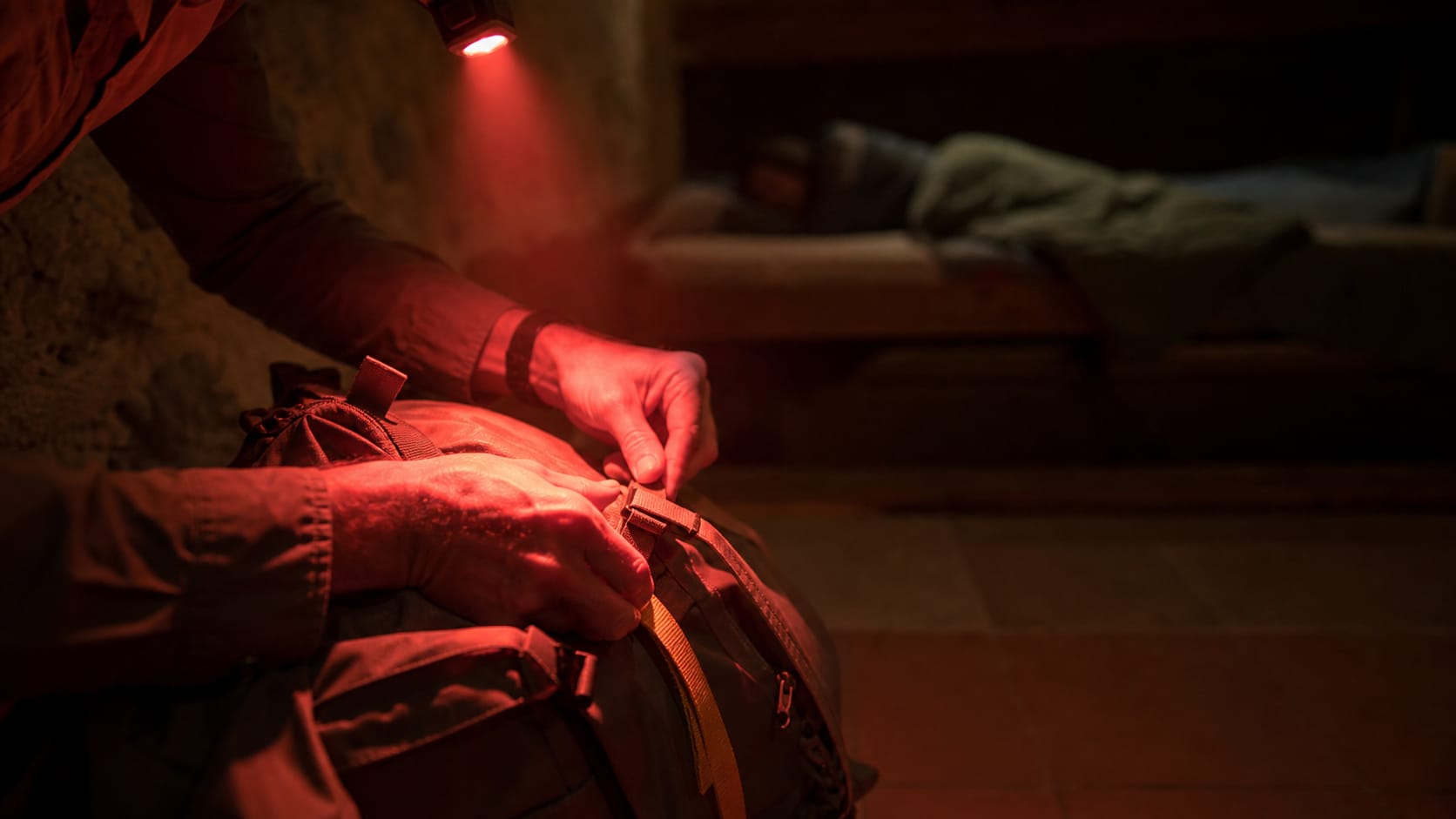
Never flip the dorm's main light on in the dark, not even for a second. That switch wakes the whole room and is the fastest way to earn a chorus of groans. Bring a headlamp instead and keep it on its red setting for anything before dawn. Red light preserves everyone's night vision, your own included, and it is far gentler on someone sleeping an arm's length away.
A head torch of around 200 lumens or more is plenty for the trail; indoors you want it dimmed and angled at the floor, not swinging across bunks at head height. Pre-position what you will need (water, boots, the day's snack) near the foot of your bed the night before, so your beam only ever points down.
In a public albergue you cannot pre-book, so you claim a bed the moment you check in by laying your sleeping bag or liner on it. That is the signal the bunk is taken. Once it is yours, keep your gear contained: your sleeping space is the mattress, not the two empty bunks beside it.
The firm rule, the one worth remembering above all others, is that your backpack never goes on a bed. Packs pick up bedbugs from floors, buses, and other albergues, and a pack on a mattress is how those bugs move into the bedding and then home in your gear. Store your bag on the floor, on the luggage rack, or hung on a hook, and leave your boots by the door where they belong.
The bathroom and kitchen are where good and careless dorm citizens separate fastest. Keep showers short; there is a queue of tired, dusty people behind you, and clear the drain of your own hair when you are done. Wipe the counter after you shave or brush your teeth. Small things, but twenty people skipping them turn a clean bathroom into a wet mess by 8 pm.
The kitchen runs on the same logic. Wash, dry, and put away everything you use the moment you finish, because the burners are shared and dinner is the busy hour. If the albergue runs a communal pilgrim meal, usually around 10 to 12 euros, join it: those shared dinners are one of the quiet joys of albergue life and sit at the heart of donativo culture. Then leave the table and the sink ready for the next person.
The whole day has a rhythm, and it fits inside the wider albergue routine. Follow it once and it becomes automatic.
Check in, 1 to 4 pm
Show your credencial, pay for the bed (dorm bunks run about 5 to 15 euros, a private albergue room 20 to 30), and take the bunk you are assigned or claim a free one with your sleeping bag.
Shower and settle
Wash and hang laundry early while the hot water and the drying line are free. Store your pack off the beds, boots by the door.
Evening
Eat in the kitchen or join the communal meal, meet the people around you, and keep the noise in the common room, not the dorm.
Prep before 10 pm
Pack everything except your sleep layer, close the zips, set a vibrate alarm, and lay out tomorrow's clothes so the morning is silent.
Quiet exit
Wake with your red headlamp only, carry your bag to the hall to dress, and lace your boots outside the sleeping room.
Before ~8 am checkout
Strip any disposable bedding if asked, bin your rubbish, leave the bunk clear, and thank the hospitalero on your way out.
If you want the etiquette to matter less on the hard nights, planning ahead helps: knowing when to book and when to walk up keeps you out of the overcrowded dorms where tempers fray fastest.
Frequently asked questions
How quiet do I need to be in a Camino albergue at night?
Silent in the sleeping room from lights-out, around 10 pm, until people begin waking near 6. No conversations, no phone calls, no ceiling lights. Take anything that makes noise into the hallway or common room, set your alarm to vibrate, and keep a plastic bag from crinkling near sleeping heads. During the day the same room is sociable; the quiet rule only binds after dark.
What are the biggest albergue dos and don'ts for snoring and early packing?
Do carry earplugs and a sleep mask, and do pack your bag the night before so dawn is silent. Don't flip the room light, rustle plastic bags, or assemble your pack on the bunk at 5 am. If you snore, skip the late wine, try a nasal strip, and take a private room on your worst nights. The through-line: protect other people's sleep the way you want yours protected.
What should I do if someone is snoring loudly and I can't sleep?
Reach for earplugs and a sleep mask first; they solve most of it. If that is not enough, a gentle roll or a cough usually makes a snorer shift without fully waking them, and never take it personally. If a free bunk is farther away, move to it, and ask the hospitalero about a quieter room the next night. One rough night will not end your Camino, so nap at a café if you need to.
Is it rude to leave an albergue very early in the morning?
Not at all. Early starts are normal on the Camino and many pilgrims are gone before 6 am. What makes it rude is the noise. Pack the night before, use a red headlamp instead of the room light, dress and lace your boots in the hallway, and carry your bag out rather than assembling it on the bunk. A silent 5 am departure is welcome; a clattering one is not.
Do I need to bring my own towel and sheets to an albergue?
Bring your own towel, yes: most albergues do not supply one, and a quick-dry travel towel packs small. For bedding, carry a lightweight sleeping bag or a sleep-sack liner. Many dorms give you a mattress and pillow but no blanket, and some provide a disposable paper sheet you lay yourself. A liner also keeps you cleaner and adds a layer of protection against bedbugs.
How do I avoid bedbugs in albergues?
Never put your backpack on a bed, since that is the main way bugs travel from floors and other albergues into the bedding. Store your pack on the floor, a rack, or a hook, and keep boots by the door. Treating your pack and liner with permethrin protects the fabric for up to six weeks. Check mattress seams if you are worried, and use your own liner rather than trusting shared blankets.
External citations
American Pilgrims on the Camino
americanpilgrims.orgPilgrim education nonprofit whose albergue and trail etiquette guidance underpins the courtesy norms described here.
Oficina de Acogida al Peregrino — official Santiago pilgrim office
oficinadelperegrino.comSource for credencial requirements and what an albergue asks of a pilgrim at check-in.
Xunta de Galicia — Rede Pública de Albergues do Camiño
xacobeo.galOperator of Galicia's public albergues, with the regulations on one-night stays and early checkout that shape dorm routine.
La Compostela del Lector
You walked this guide to Santiago.
All 771 km, 0 stages, stamped end to end.