
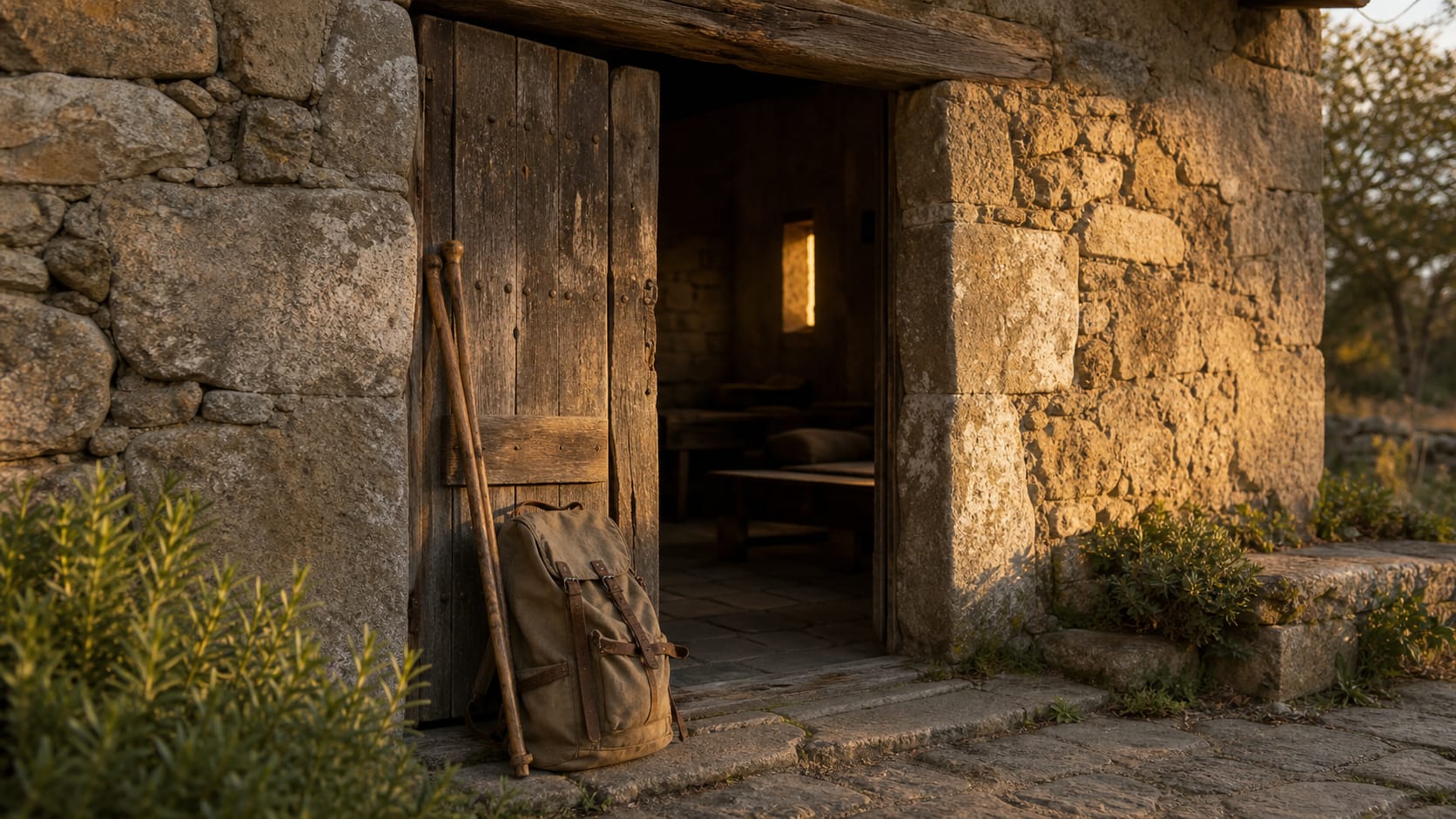
Four types cover almost every pilgrim bed on the route: municipal, parochial, private, and donativo. Municipal and parochial albergues are the public tier, cheap and walk-up only. Private albergues are small businesses that charge more and take reservations. A donativo runs on donations instead of a fixed price. Every one gives you a bunk in a shared dorm, a shower, and a stamp for your credencial. The differences come down to who runs the place, what it costs, whether you can book, and how strict the house feels.
Choosing between them is a nightly decision, not a plan you lock in at home. Four things settle it: how early you expect to arrive, how much you want to spend, whether you need a guaranteed bed on a busy stage, and whether you are after company or a quiet night. Arrive early on a budget and want the shared-table feeling, and the public and donativo places are the obvious pick. Arrive late, want certainty, or need real rest before a hard stage, and a booked private bed earns its few extra euros. Most pilgrims mix all four across a single Camino.
Four axes tell them apart: who runs them, what they cost, whether you can reserve, and how the house rules feel. Everything else they share. Every albergue on the Camino is dorm-based, asks for a stamped credencial at check-in, opens for pilgrims in the early afternoon, and turns the beds over the next morning around 08:00. The complete guide to how Camino albergues work covers those shared basics in depth; the table below is the shape of each type at a glance.
| Albergue type | Typical price per night | Who runs it | Reserve or walk-up | Stay limit and rules |
|---|---|---|---|---|
| Municipal | €7–14 | Town council | Walk-up only | One night; pilgrim-only with credencial; ~22:00 curfew |
| Parochial | Donation, often €10+ | Parish and volunteers | Walk-up only | One night; pilgrim-only; often a shared meal and blessing |
| Private | €14–25 (22–27 on busier routes) | Family or small company | Reserve or walk up | Multi-night possible; open to non-pilgrims; more comfort |
| Donativo | Pay what you can, fair floor ~€10 | Parish, association, or volunteers | Walk-up only | One night; pilgrim-first; runs on trust |
In Galicia the picture gains one variant: the Xunta runs its own public network, priced around €8–10 and walk-up only. It behaves like a municipal, and it covers the crowded last stretch into Santiago where public beds matter most.
These are the cheapest beds on any stage and the reason the Camino stays affordable. Municipal albergues are owned by the town council; parochial ones are run by the parish, usually with volunteer hospitaleros. A municipal costs roughly €7 to €14, a parochial often just a donation, and both are strictly first-come, first-served. You cannot phone ahead. You show your credencial, take the next free bunk, and stay one night unless illness or injury changes that.
Dorms in the public tier are the biggest on the route, some holding up to 100 beds in a converted school or monastery. They are pilgrim-only: no credencial, no bed. In Galicia the network is run by the Xunta rather than the town, at a fixed price near €8 to €10, but it works the same way at the counter.
Parochial albergues add something the others do not. Many cook a shared pilgrim dinner, offer an evening blessing, and lean on community over comfort. The bunks may be basic and the walls thin, but the table is where the day's walking turns into conversation. If that is what you came for, arrive early, because these fill first. A crowded public dorm also asks the most of everyone in it, so the unwritten rules of albergue life matter here more than anywhere.
Private albergues are businesses, run by a family or a small company, and the price reflects it: roughly €14 to €25 a night, rising to €22 to €27 on busier routes like the Norte. For the extra euros you get smaller dorms, better bathrooms, laundry machines, reliable wifi, and often a kitchen or a meal on offer. The real advantage is that you can reserve, by phone, by app, or through the albergue's own site, which is why they anchor any plan built around guaranteed beds.
Private places are also the one type not reserved for pilgrims. Cyclists, walkers without a credencial, and the occasional tourist can stay, though the atmosphere still tilts pilgrim. Some belong to networks or informal chains that repeat down a route, so once you like one brand you can look for it stage after stage. When every public bed is taken, a private albergue is usually the difference between a bunk and a long evening of phone calls. For the tiers above even the private albergue, from pensiones to hotels, see the hotel and guesthouse alternatives.
A donativo has no fixed price, which is not the same as free. You give what you can afford and what the bed was worth to you, in a box by the door or a quiet envelope, and the money keeps the place open for the pilgrim walking in tomorrow. Treating a donativo as a free night is the one habit that closes them.
A fair donation has a floor. For a bunk and a hot shower, think around €10, the same as you would leave at a municipal. Where dinner is shared, €15 and up is closer to honest, and a pilgrim who had a good night and can afford it leaves €30 to €35. Many donativos are parish-run or tied to a religious community, and the shared meal is often the heart of the stay. The culture behind donativo giving is worth understanding before you walk in, because the trust it runs on is easy to break without meaning to.
Price sorts the four types cleanly. Municipal beds run €7 to €14. The Xunta network in Galicia sits near €8 to €10. Parochial and donativo places take a donation, so budget €10 or more and give what feels right. Private albergues cost €14 to €25, climbing to €22 to €27 on busier routes. Those figures all buy a dorm bunk; the moment you want a room to yourself, you leave albergue pricing behind.
Above the albergues sits a separate tier: hostales, pensiones, casas rurales, hotels, and the historic paradores, running from about €35 to €70 and well past it for a private room. Most budget pilgrims live in the €10 to €25 band and step up to a room every few nights to reset. A dorm-based day still totals more than the bed alone once you add dinner and breakfast, so the bunk price is only part of what a night costs; the full breakdown of albergue costs and a weekly budget does that math stage by stage.
Only one type takes reservations. Municipal, parochial, and Xunta albergues are walk-up only, every one of them, no matter how well known. No hospitalero will hold a public bed over the phone. Private albergues do take bookings, by phone, WhatsApp, an app like Gronze, or their own website, and that is the entire practical difference when pilgrims say they booked ahead.
Most pilgrims mix the two. They walk up to public and donativo beds on quiet stages and reserve a private bed for the nights that matter: a group that needs beds together, a couple wanting a private room, or a bottleneck stage in peak season. Whether you should book at all depends on route, month, and how you like to walk, which the booking versus walking up decision works through stage by stage.
Run four questions at the end of each stage, in order. What time will you arrive? What is your budget tonight? Do you need a guaranteed bed on a busy stage? And do you want company or quiet? Early, thrifty, and sociable points you at the public and donativo tier. Late, flexible, or craving a real rest points you at a booked private bed. Everything in between is a judgement call you make on the walk in.
If
Early, thrifty, sociable
If
Late, unsure, or busy stage
If
Comfort or a real rest
For a first week on the Camino Francés, a simple rule holds: walk up to public and donativo beds, arrive by early afternoon, and pre-book only the stages you already know will crowd. Adjust the mix once you learn your own pace and how you actually like to sleep.
Frequently asked questions
How much should I pay at a donativo albergue versus a municipal or private one?
A municipal costs a set €7 to €14 and a private €14 to €25, so you pay the posted price. A donativo has no fixed price: leave around €10 for a bunk and shower, €15 or more when dinner is shared, and €30 to €35 if you had a good night and can afford it. The donation is not optional generosity; it is what keeps the next pilgrim's bed open.
Which albergue types can I book ahead and which are walk-up only?
Only private albergues take reservations, by phone, app, or their own website. Municipal, parochial, and Xunta albergues are first-come, first-served with no exceptions, so a bed there depends on when you arrive, not on a booking. Most pilgrims reserve a private bed for busy stages and walk up to public beds the rest of the time.
Do I need a pilgrim credential to stay in an albergue?
Yes for the public tier. Municipal, parochial, Xunta, and donativo albergues are pilgrim-only and ask for a stamped credencial at check-in. Private albergues are more relaxed and will often take non-pilgrims, but you still want the credencial for the cheaper beds and for your Compostela in Santiago.
What time should I arrive to get a bed in a first-come, first-served albergue?
Aim to arrive by early afternoon, around the 13:00 to 14:00 opening. Public albergues on a busy stage can fill by mid-afternoon, and by 17:00 you are competing for whatever is left. Leaving early and checking in by 14:00 is the habit that makes walk-ups reliable.
Are albergues open all year on the Camino Francés?
Not all of them. Many municipal albergues run seasonally, roughly Easter to November, and a large share of private albergues close in winter. Enough stay open year-round that a winter Camino is possible, but you need to confirm openings the night before rather than assume a bed.
Can non-pilgrims stay in Camino albergues?
In private albergues, usually yes: they are businesses and not reserved for pilgrims, though the feel stays pilgrim-led. The public and donativo tier is pilgrim-only and gated by the credencial, so a non-pilgrim there would give way to someone walking the route.
External citations
Oficina de Acogida al Peregrino — Santiago de Compostela pilgrim office
oficinadelperegrino.comOfficial pilgrim office for credencial rules, Compostela requirements, and what counts as a valid pilgrim stay in an albergue.
American Pilgrims on the Camino
americanpilgrims.orgLong-running pilgrim association with practical guidance on albergue types, credenciales, and etiquette for first-time walkers.
Xunta de Galicia — public albergue network
xacobeo.galOperator of Galicia's public albergues, with prices, rules, and opening times for the final stretch into Santiago.
La Compostela del Lector
You walked this guide to Santiago.
All 771 km, 0 stages, stamped end to end.