
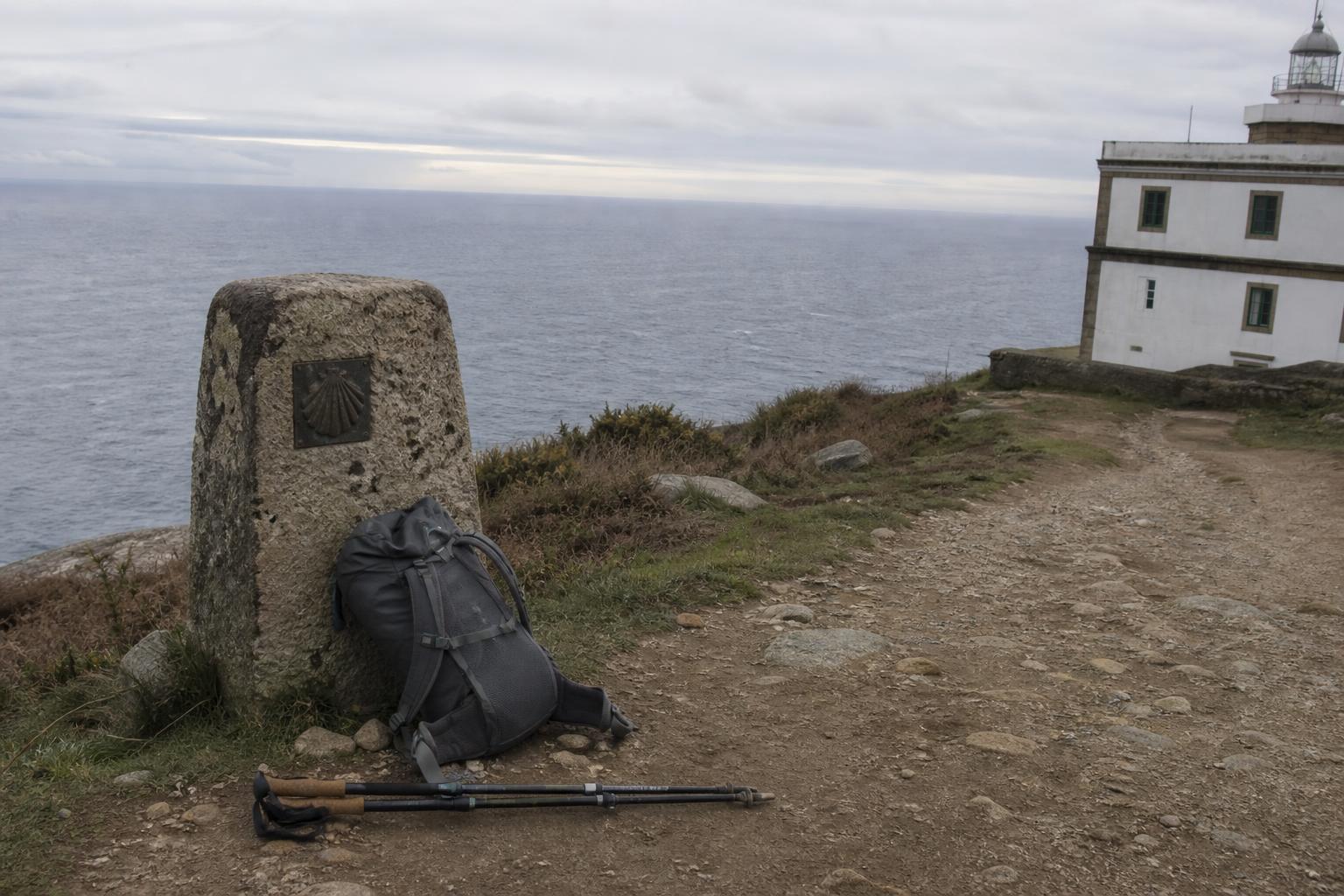
The Camino Finisterre is the one Camino route that starts in Santiago instead of ending there. It runs about 87 kilometres west to the town of Fisterra on the Atlantic, plus 3.2 kilometres more to the lighthouse on the cape, with a 28-kilometre coastal link north to Muxía. There is no Compostela for it. Each town issues its own certificate instead.
The route leaves the Obradoiro, crosses farmland and eucalyptus to Negreira, climbs over open hills to Olveiroa, and splits at Hospital, a junction about 5 kilometres past Olveiroa, where one arm drops to the sea at Cee and the other heads north to Muxía. In 2000 there were no albergues on it at all. Today there are more than fifty.
How many pilgrims keep walking west
Nobody knows, and the numbers you will read are guesses. Published estimates run from under 1 percent of Santiago arrivals to 10 or 15 percent, none of them backed by a count. The Pilgrim's Office counts people arriving in Santiago, because that is where it issues the Compostela. It has no way of counting people walking out of the city. On a summer morning you will not be alone on the way to Negreira, and you will not be in a crowd either.
Yes, but only one of them on foot. Three walking days gets you from Santiago to Fisterra at 20 to 34 kilometres a day. Walking both towns needs a fourth day. If your flight is tight, walk to Fisterra and see Muxía from a bus window, or not at all.
Three days: Santiago to Fisterra only
Santiago to Negreira, Negreira to Olveiroa, Olveiroa to Fisterra. The last day is about 32 kilometres, ending on the coast after the descent through Cee. Walk out to the lighthouse that evening, sleep in Fisterra, and take the bus back the next morning. That is four days door to door, so count the bus day against your flight, not the walking days alone.
Four days: both towns on foot
Walk the first two stages as above, then take the Muxía arm at Hospital and reach Muxía on day three (about 31 kilometres). Day four is the 28-kilometre coast walk from Muxía to Fisterra via Lires. The reverse works too: Fisterra on day three, Muxía on day four. The total is about 113 to 114 kilometres either way.
Two days or fewer: what a bus can still give you
Two days is not enough to walk to either town. Take the bus. Monbus runs from Santiago's bus station to Fisterra and to Muxía, so you can see the cape, the sanctuary at Muxía and the sunset in a day trip, or stay one night. You will not earn the Fisterrana or the Muxiana, which are for walkers with a stamped credencial. If you are still in Santiago and choosing between this and a rest, our guide to the days after you reach Santiago lays out what the city asks of you first.
The Santiago to Finisterre distance is about 87 kilometres to Fisterra town, or about 90 to the lighthouse. The usual split is four stages, with the long one second.
| Stage | Distance | Notes |
|---|---|---|
| Santiago to Negreira | 20.6 km | Leaving the city; a short first day |
| Negreira to Olveiroa | 33.6 km | The longest day; Vilaserío is the place to split it |
| Olveiroa to Cee / Corcubión | 21.4 km | Splits at Hospital; then 13 km with no services before the drop to the sea |
| Corcubión to Fisterra | 10.6 km | Coastal and short; plus 3.2 km more to the lighthouse |
| Olveiroa to Muxía (Muxía arm) | 31.1 km | Leaves the Fisterra route at Hospital |
| Muxía to Fisterra (coast link) | 27.6 km | Via Lires; about 14 km with no services out of Muxía |
The three-day plan merges the last two Fisterra stages into one day of about 32 kilometres. Cee and Corcubión run into each other, so either works as a stop on a four-day walk.
Where the beds run out
Negreira and Olveiroa are the realistic places to sleep on the first two nights, and that is where beds get tight. The public albergues in Negreira, Olveiroa, Dumbría and Fisterra belong to the Xunta network: about 10 euros, one night only, no reservations, first come, first served. Private albergues and pensions in the same villages do take bookings. In summer, book the Negreira and Olveiroa nights a day ahead, or plan to stop in a smaller village such as Vilaserío on day two and split the 33 kilometres. The general rules for public beds are in our guide to Camino albergues.
Walk to Muxía first and finish at Fisterra if you want the lighthouse and the sunset over the sea as your last image. Walk to Fisterra first if you want the shorter bus ride home: Muxía is the closer of the two to Santiago by road. Both towns have a kilometre-zero marker. Neither order is longer; only the ending changes.
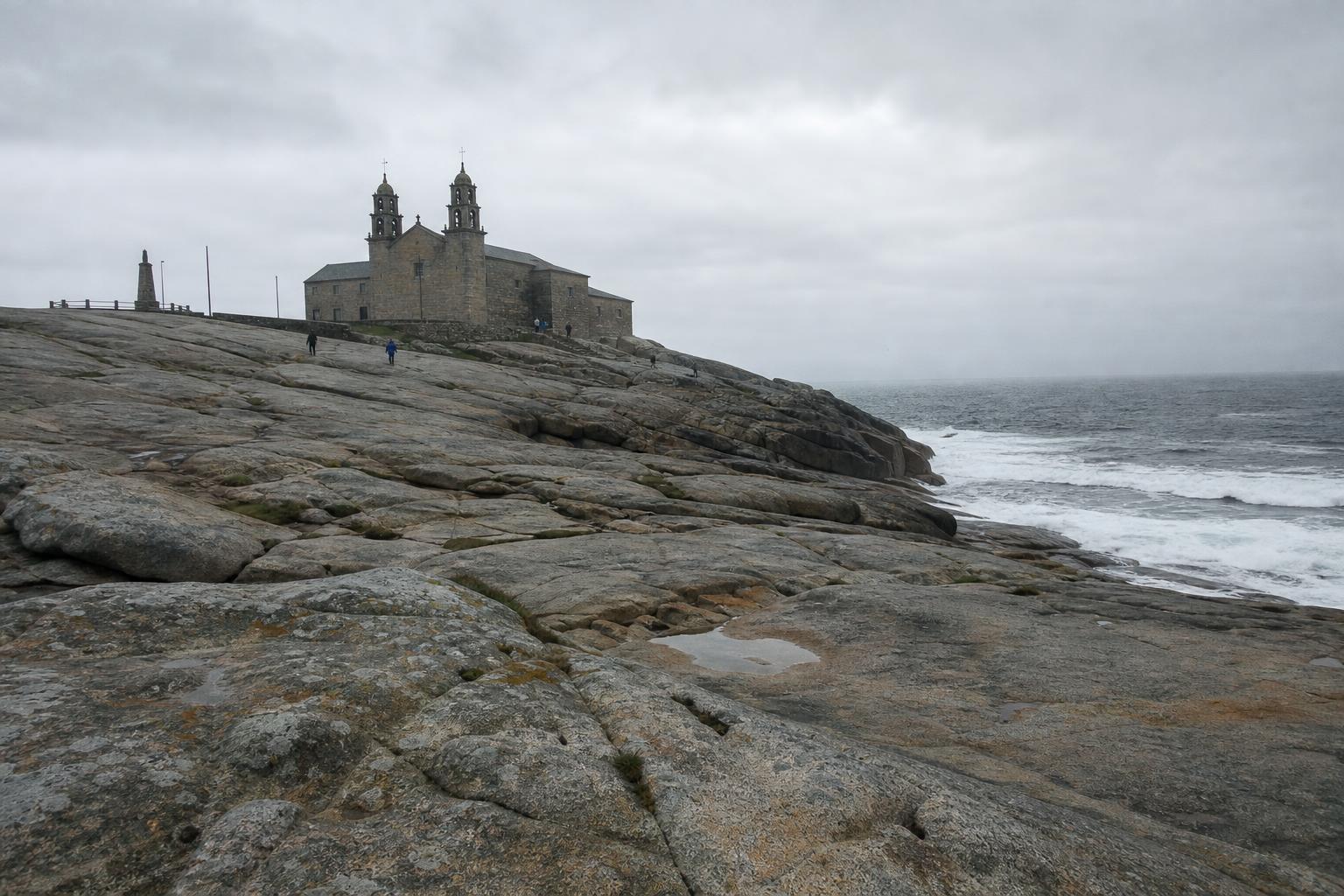
Let the bus timetable decide the order
Buses between Fisterra and Muxía are few, and most connections go through Cee, so getting from one town to the other by road is the awkward leg. If you are walking both, the end you walk to second is the one you ride home from. Check the Monbus timetable for that town, for the day of the week you will be there, before you choose the order. Weekend timetables are thinner.
Budget 30 to 60 euros a day. A public albergue bed is about 10 euros, a private one roughly 15 to 25, and the pilgrim menu in Galicia runs 12 to 15 euros. Add breakfast, a picnic lunch, and the bus back to Santiago at around 7 euros.
A worked three-day budget, and the same with Muxía added
On public albergues and pilgrim menus:
| Item | Three days, Fisterra only | Four days, both towns |
|---|---|---|
| Beds (public albergues, about €10) | €30 | €40 |
| Food (breakfast, lunch, pilgrim menu) | €75 to €105 | €100 to €140 |
| Bus back to Santiago | about €7 | about €7 |
| Total | about €110 to €145 | about €150 to €190 |
Booking private albergues for the two tight nights adds roughly 10 to 30 euros. The certificates are free or cost a few euros; reports differ, so carry coins. Our pilgrim menu guide has the regional prices behind the food line.
Take your stamped credencial to the tourist office on Praza da Constitución in Fisterra for the Fisterrana, or to the public albergue if the office is closed. In Muxía, the Muxiana comes from the tourist office or the municipal albergue. Both are issued by the town councils, in Galician, and both ask for stamps from the walk out of Santiago, so collect two a day.
The Fisterrana certificate: where and when
Go the afternoon you arrive. Bring the credencial you walked with, stamped in Negreira, Olveiroa and the places between. Neither certificate is issued in Santiago, and neither replaces the Compostela, so pick that up before you leave the city. How the Compostela itself works is in our guide to the Compostela certificate.
Buses back, and how to time them against your flight
Monbus runs several services a day from both towns to Santiago, and you can buy the ticket on the bus. From Fisterra most services take two to three hours along the coast. From Muxía it is shorter. Morning buses fill in summer, and timetables change between weekdays and weekends, so check monbus.es the evening before. With a flight from Santiago, plan to be back in the city the day before, not the morning of. If you are going straight home from the coast, our guide to the post-Camino blues covers the week after you land.
Frequently asked questions
What does walking from Santiago to Finisterre and Muxía actually cost, all in?
Plan on 30 to 60 euros a day. Three days to Fisterra on public albergues and pilgrim menus lands at about 110 to 145 euros including the bus back. Walking both towns over four days comes to about 150 to 190 euros.
Do I need to book beds in Negreira and Olveiroa, or can I just walk in?
The public albergues cannot be booked and fill in order of arrival, so walking in is a gamble on a busy night. Private albergues and pensions in both villages do take bookings. Book a day ahead in summer, or stop at a smaller village before the crowd.
Can I take a bus to Finisterre instead of walking?
Yes. Monbus runs several services a day from Santiago bus station to Fisterra and to Muxía. You will see the cape and the sunset. You will not get the Fisterrana or the Muxiana, which are for pilgrims who walked with a stamped credencial.
Do I still get a Compostela for walking to Finisterre?
No. The Compostela is issued in Santiago for a pilgrimage that ends at the Cathedral. Walking west earns the Fisterrana in Fisterra and the Muxiana in Muxía, separate certificates from the town councils that do not replace the Compostela.
Should I take a rest day in Santiago before walking on?
If you have the day, take it. A rest day lets you collect your Compostela, do laundry and start the long second stage on fresh legs. If your flight is fixed, count the rest day and the bus day before you count walking days.
Is the route waymarked well enough to walk without a guidebook?
Yes. Yellow arrows and shell markers run the whole way, and the coast link between Muxía and Fisterra is marked in both directions. Watch the split at Hospital, where one arm goes to Fisterra and the other to Muxía, and read the marker before you commit.
External citations
Gronze: Camino de Fisterra y Muxía
www.gronze.com/santiago-finisterreStage distances, the split at Hospital, the longest stretches without services, the albergue network and where each certificate is issued.
Albergues Camino de Santiago: the Xunta public albergue network
www.alberguescaminosantiago.com/2024/10/la-red-publica-de-albergues-de-la-xunta-de-galiciaThe flat 10 euro price, the one-night limit and the no-reservation rule at Xunta albergues.
Oficina de Acogida al Peregrino: statistics
oficinadelperegrino.com/estadisticasThe office counts Compostelas issued to pilgrims arriving in Santiago, which is why no official continuation rate exists.
Monbus
www.monbus.esThe operator's own timetables and fares for Fisterra and Muxía to Santiago.
La Compostela del Lector
You walked this guide to Santiago.
All 771 km, 0 stages, stamped end to end.