
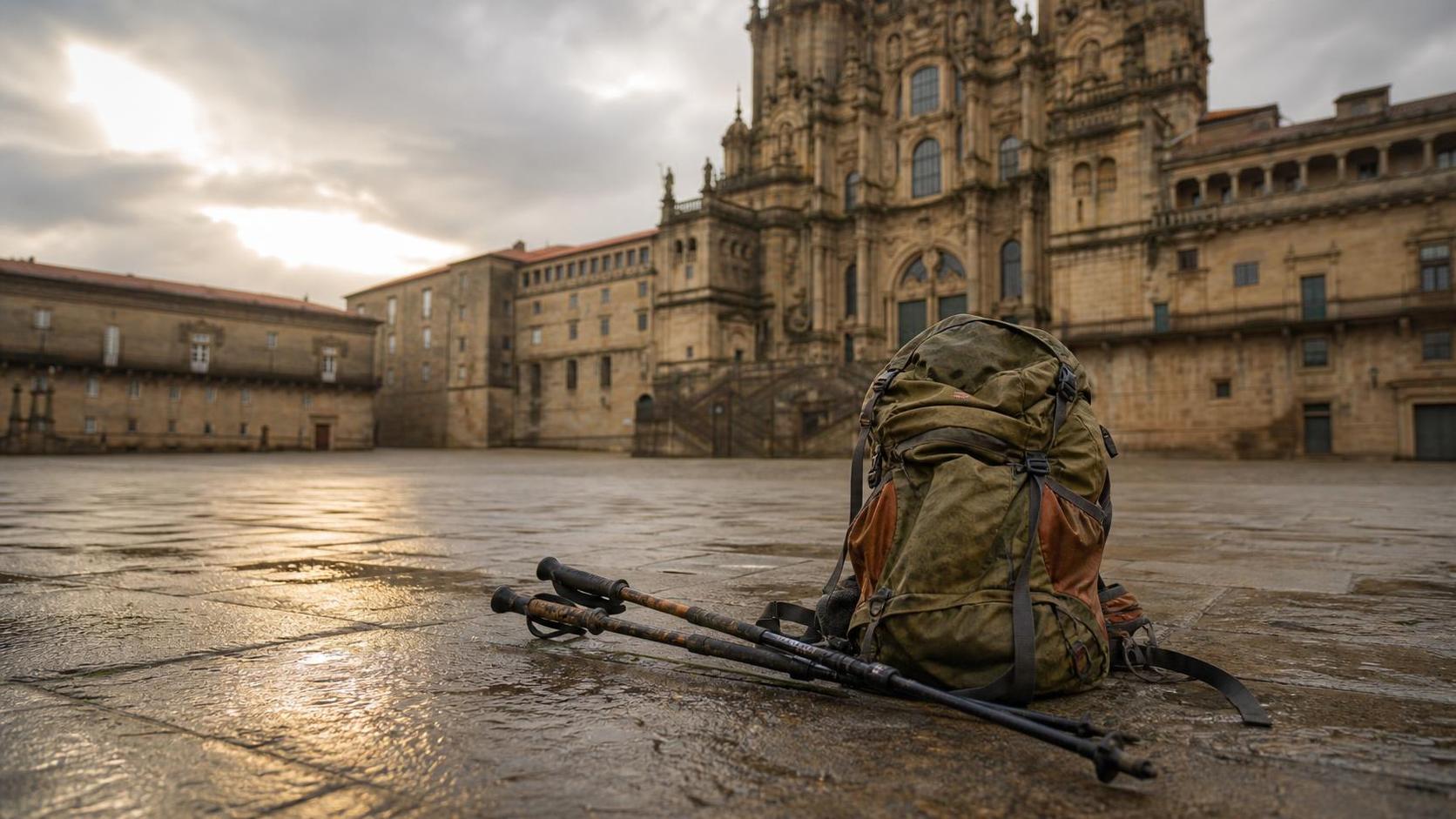
You arrive, drop your pack, and stand in the Obradoiro for as long as you need to. Then comes the Pilgrim's Office queue for the Compostela, the pilgrim's Mass, one or two recovery days in the city, a decision about walking on to Finisterre, and finally the bus, train or flight home. Four of those have opening hours, and only one of them can actually run out on you.
That is the thing worth knowing before you arrive: the Pilgrim's Office closes at 19:00, and the queue is longest in the early afternoon, which is exactly when most pilgrims walk into the city. Everything else in Santiago waits. The cathedral is open until 21:00 and free. Left luggage runs until 20:30. Restaurants have not even started thinking about dinner. The office is the only door that shuts.
Almost every guide to this treats it as one errand, the certificate, and stops there. The rest of it, where you sleep once the albergue is behind you, how you get to the airport, what to do with a backpack you no longer want, and what the following week feels like, gets left to you at the exact moment you are least able to plan anything. This is the whole sequence in one place.
Take the square first. You have walked a long way to stand there and there is no queue for it.
Then deal with the pack, because it decides the shape of the next two hours. The cathedral does not admit backpacks, for security reasons, and the museum rule is more precise: nothing larger than 40 by 40 centimetres. A small daypack usually passes. The thing you have been carrying since Saint-Jean does not.
The nearest answer is Correos, the Spanish post office, at Rúa do Franco 4, about two minutes and 150 metres from the Obradoiro. Left luggage there is €4 a day for a rucksack, €6 for a big suitcase, €7 for a bicycle and €1 for a walking pole, open 08:30 to 20:30. Those are the 2026 prices, and they are worth quoting because most guides still print €3, and because every private locker company in the city charges more: the ones around the old town run €5.99 to €16.95 a day. There is a second Correos counter at Rúa Carretas 29, right beside the Pilgrim's Office, open from the end of March to the end of October.
If you have a bed booked, your accommodation will almost always hold the pack before check-in, which costs nothing. Ask before you pay anyone.
The Pilgrim's Reception Office is at Rúa das Carretas 33, entered from García Sabell, about 300 metres and four or five minutes downhill from the Obradoiro, past the Parador on your right. It is open 09:00 to 19:00 every day of the year, closing only on 25 December and 1 January, when the Compostela is issued in the cathedral sacristy instead.
Ignore what you have read about seasonal hours. Two of the largest Camino operators publish 10:30 to 18:30 and a summer-winter split; the office itself publishes 9 to 7, year-round, and has done since at least March 2026.
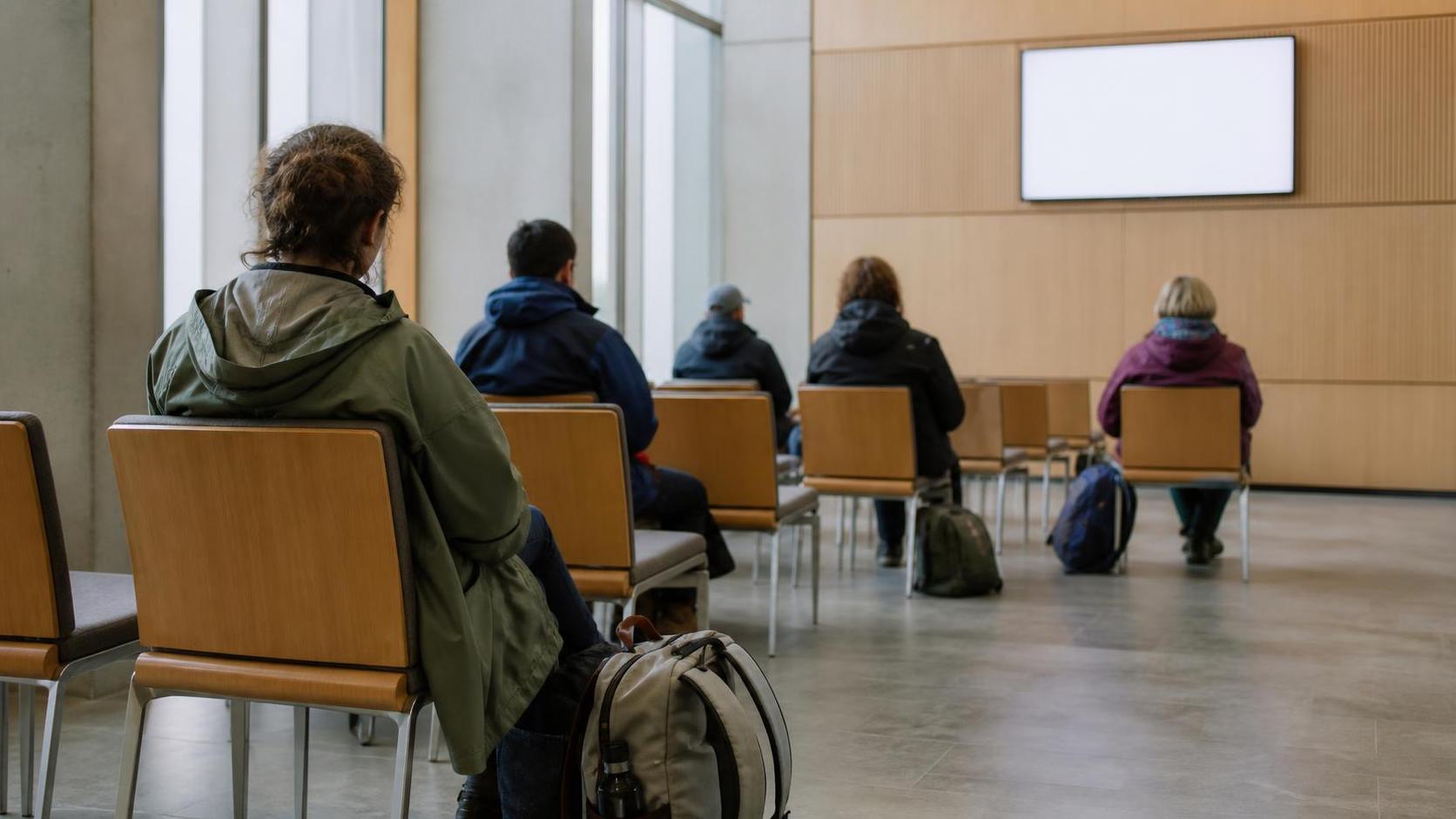
Here is what actually happens when you walk in. You go to the waiting area and take a ticket with a number on it. The ticket carries a QR code, and scanning it shows your position in the queue in real time. You can then leave, get a coffee, and come back, and the office's own advice is to be back at least 50 numbers before yours. When your number comes up, a screen sends you to a specific desk.
Two corrections to the common account. The QR is a live queue position, not a booked time slot — you cannot reserve 15:40 from the trail. And no official source publishes a daily ticket limit, despite what several guides claim; the only scarcity the office admits to is that during heavy periods it cannot guarantee same-day collection. One ticket per person, and the Compostela is only ever handed over in person, never to a friend, never by post.
Waits are typically under half an hour once you hold a number, but it varies. The office is busiest through the early afternoon, when the day's arrivals land. It is quietest first thing in the morning and in the last half hour before closing.
The Compostela is free. The Certificate of Distance costs €3 and records your starting point, the kilometres, the route and the arrival date. Most people take both; a protective tube runs about €2 to €3 more, though no official price exists for it. If the religious or spiritual motivation on the Compostela form does not describe you, the Distance certificate has no motivation requirement at all.
The eligibility rules changed in February 2025, and the change is smaller than the internet suggests. You still need 100 continuous kilometres on foot or horseback, or 200 by bicycle, and if you started outside Spain, at least 70 of them inside it. What the new wording actually did was tighten things: the kilometres must be continuous, on one single route, heading toward Santiago, with the final counting stage the one immediately before you reach the cathedral. The widely repeated claim that the 100 km may now sit on any recognised section is wrong. So is the "final stage must be 20 km" rule you will see quoted; it appears in no official text.
Three things the official English page leaves out, and most guides never mention: there is a sailing category (100 nautical miles, then finish on foot from the port where you landed), there is a separate certificate for children too young to receive the Compostela, and you can request a Distance certificate retroactively for a Camino you walked years ago.
For the full stamp rules, who needs which document, and how the credencial works, we have a dedicated guide to the credential, the Compostela and the distance certificate — and a separate one on getting your pilgrim credential before you set out.
Mass is celebrated in the cathedral four times a day: 07:30, 09:30, 12:00 and 19:30. Anyone can attend, whatever they believe and however far they walked. The noon Mass is the one everybody means, and the one where a seat requires turning up early. A list of the pilgrims who passed through the Pilgrim's Office in the previous 24 hours is read out, giving starting points and nationalities. Hearing your own country and your own starting town read aloud in a Galician cathedral is, for a lot of people, the moment the walk actually ends.
The botafumeiro is currently not in use. Restoration scaffolding in the dome above the transept has blocked the swinging mechanism since roughly mid-August 2026, and the cathedral has given no return date beyond "several weeks." This is not yet reflected on the cathedral's own website, so you will still find pages listing the dates it flies. When it does return, it flies on fixed solemnities — Epiphany, Easter Sunday, Ascension, 23 May, Pentecost, 25 July, 15 August, All Saints, Christ the King, 8 and 25 December, 30 December — or when a group has paid for it in advance. The cathedral publishes no price for that; the €450 you will read is a blog figure, not an official one.
For the record, since you may not get to see it: 53 kilograms, a metre and a half tall, hung from 20 metres up, moved by eight tiraboleiros, and capable of something close to 68 km/h at the bottom of its arc.
If English is not your first language, this part is genuinely useful and almost never published in English: the cathedral and the Pilgrim's Office run Mass in several languages. German at 09:00 on weekdays and 11:00 on Sundays at San Fructuoso, French at 09:15 in the Pilgrim Reception Centre chapel, English at 10:30 in the Pilgrim's Office chapel except Wednesdays, Polish at 16:00, and Italian at 16:30 at Santa María do Camiño.
Entry to the cathedral itself is free, daily 07:00 to 21:00. The paid parts are the museum and the tours: €9 for the permanent collection, €15 for the rooftops, €23 for the complete visit. Accredited pilgrims get the reduced rate on every ticket, which brings the complete visit to €19. Bring the Compostela to the museum entrance. There are also free timed invitations for the Pórtico da Gloria, collected online up to a week ahead.
Two nights covers it for most people. The first day is the office, the Mass and a long meal you do not have to walk off. The second is the museum, the market and the specific pleasure of being horizontal. A third earns its place if you want the rooftops or a day trip, or if you simply cannot face an airport yet.
Budget honestly, because Santiago is not Camino-priced and the swing is brutal. An en-suite double within a kilometre of the cathedral runs €110 to €160 on a busy September night and €45 to €80 in November — the same room, two and a half times the price. Private albergue beds run €16 to €25, and €25 to €35 at peak for a central one.
A realistic day, per person: €45 to €75 on the albergue-and-menú-del-día version, €110 to €150 in a private room in shoulder season, and up to €225 at peak. The menú del día runs €13 to €18 in the old town, less if you walk two streets off the tourist run.
For the museums: the Museo das Peregrinacións is free, the Museo do Pobo Galego is no longer free (€5, free on Sundays, and closed Mondays), and the cathedral museum is the €23 one. If you want to place these days inside the whole trip's spending, our 30-day Camino budget has the rest of it.
The other thing worth doing is nothing. You have walked for weeks on a schedule set by daylight and bed availability. Two days without either is not wasted time; it is the part of the trip where the walking stops being something you are doing and starts being something you did. Our guide on when to take a rest day applies just as well after the finish as before it.
Choose by the state of your feet and the days you have, not by obligation. Nobody is grading this.
Santiago to Finisterre is about 87 to 90 kilometres, three hard days or four comfortable ones. Muxía is a similar distance by its own route, and the two are linked by a 28-kilometre stretch via Lires, so walking both runs about 115 kilometres and four to six days. The routes share their first 60 kilometres and split at Hospital, a hamlet five kilometres past Olveiroa. Stage distances, bed limits and day-by-day plans are in our guide to walking on to Finisterre and Muxía.
If the feet are finished, the bus is not cheating. Monbus runs direct services in about 1h15 for around €7.20, plus slower coastal runs of two to three hours. In summer the first morning buses genuinely fill up, so buy ahead or at the kiosk the day before. Finisterre to Muxía direct is 33 minutes and €2.60, but there is exactly one service a day, at 11:30 — miss it and the day changes shape.
Walking west earns no Compostela, and the reason is direction rather than distance: the rules require the final stage to end at the cathedral in Santiago, and you are walking away from it. What you earn instead is the Fisterrana, issued by the Concello de Fisterra at the municipal albergue on Rúa Real 2 or the tourist office on Praza da Constitución, and the Muxiana at the Muxía tourist office. Both want a credencial with two stamps a day from Santiago, neither requires a religious motive, and neither is issued in Santiago — collect your Compostela before you leave. The Fisterrana is generally free, though one recent guide reports a €3 cash charge, so carry coins.
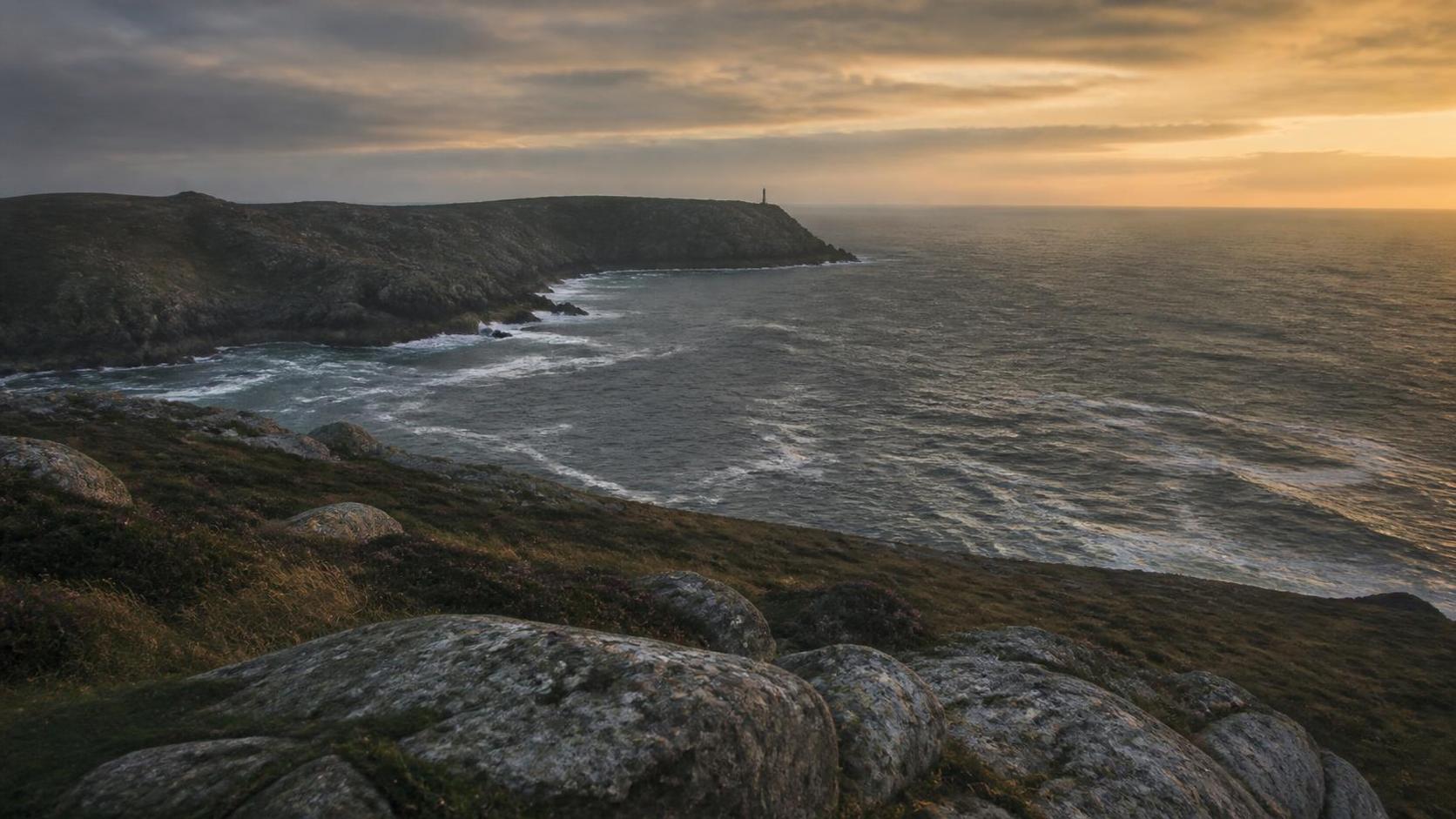
The lighthouse is about 3.2 kilometres from Fisterra town, so roughly seven there and back, and it sits about 140 metres above the Atlantic. Take a head torch if you are staying for sunset, and do not swim: the beaches out there have serious currents. There are 0.00 km markers at both Finisterre and Muxía, which confuses people every year.
Santiago airport (SCQ) is about 12 kilometres out at Lavacolla. The 6A bus costs €1, takes 25 to 35 minutes, and runs from the Intermodal station roughly every 15 to 30 minutes, first departure 06:00 from the city and last return 00:30. Half the runs are direct shuttles. A taxi is a fixed €23, any hour, plus about €0.60 a bag and €3.20 for a bicycle or a phone booking.
The honest line on early flights: the first bus reaches the airport around 06:25 to 06:40, so anything departing before about 08:00 needs a taxi. Ignore the €6 airport bus fare you may see quoted; that was a proposal and is not in force.
The Intermodal station on Rúa do Hórreo puts trains, long-distance coaches and the airport bus in one building. It is 1.1 to 1.3 kilometres from the old town and uphill on the way back: 15 to 20 minutes with a pack, whatever the "10 minutes to the cathedral" pages tell you.
Trains reach Madrid in about three to three and a half hours since the high-speed line opened, A Coruña in half an hour, Vigo in under an hour. Renfe's own route page still advertises 5h34, which is the pre-2021 figure; ignore it. Fares are demand-priced, so book early if you can.
Two coach routes deserve more attention than they get. There is a direct coach to Madrid airport, which is usually the cheapest way to a long-haul flight, from about €18.90. And Porto is three hours away for roughly €17, which for a lot of European pilgrims is a cheaper flight home than anything leaving Santiago.
Should you ship the backpack home?
Probably not, and this is the section most guides get wrong.
Posting a 10 to 12 kilogram pack to Germany, the UK or France costs €50 in a Correos flat-rate box if it compresses into 50 by 30 by 30 centimetres, or €64 to €71 as a standard parcel. An airline checked bag added at booking is typically €20 to €40. Added at booking, the bag wins clearly. Added late or at the airport desk, it is a coin flip against the box.
The real point is that a Camino pack weighs 7 to 12 kilograms, which is well under any 20-kilogram allowance. Weight is almost never the problem. The problem is a cabin-only fare, a pair of walking poles that cannot fly in the cabin, a Compostela tube and a bottle of Albariño.
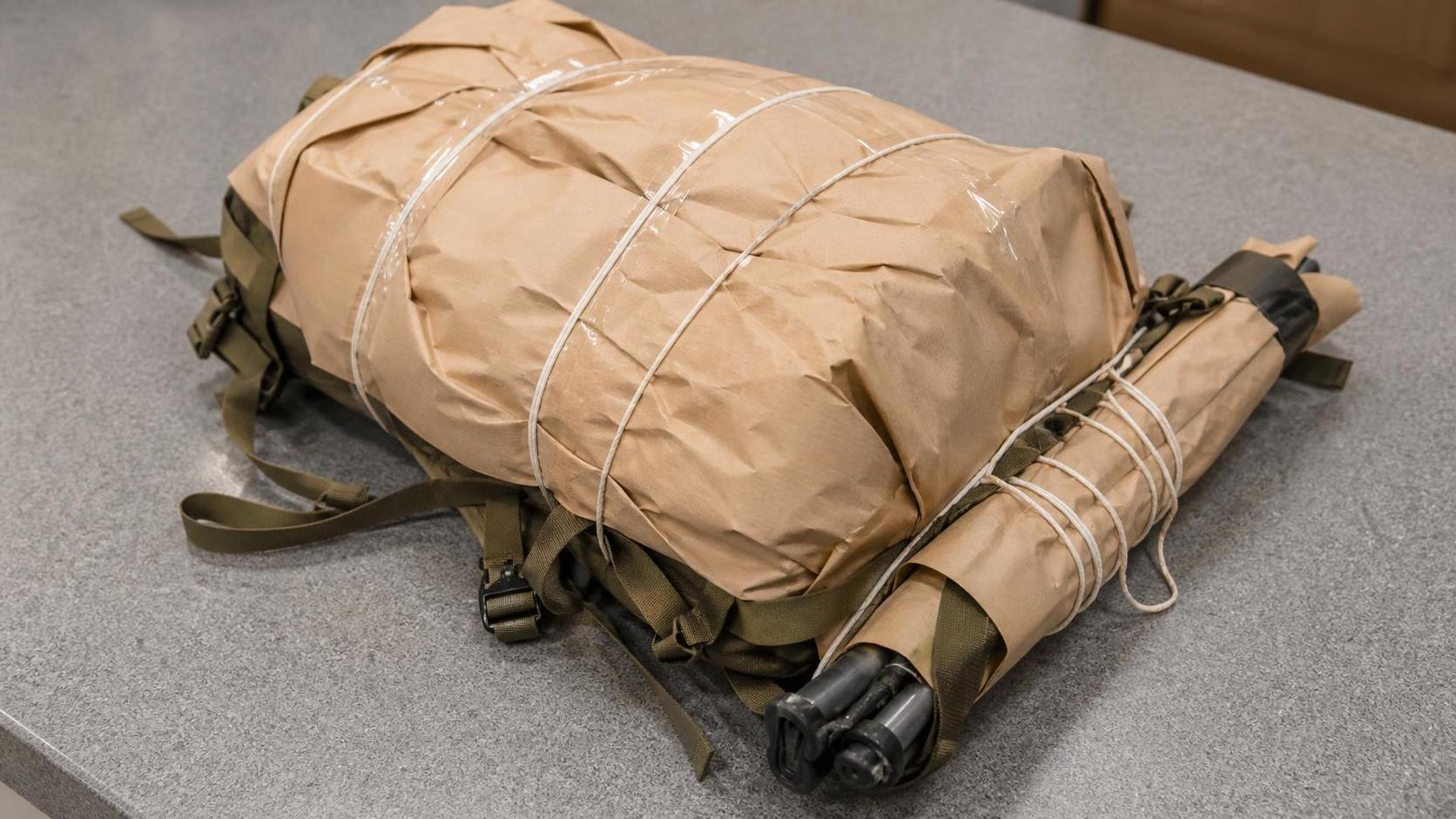
Shipping genuinely wins in three cases: when you have two or more flight legs, because bag fees are charged per leg and the parcel is charged once; when you flew in hand-luggage-only and would be paying the worst late-add tier; and for poles alone, which Correos will send on their own in a dedicated €4.96 tube. It essentially never wins intercontinentally, where €126 to the US loses to a transatlantic fare that already includes a bag.
Here is where this guide has to be careful, because the internet is very confident about something nobody has measured.
The post-Camino blues are real in the sense that pilgrims describe them constantly: a flatness that arrives a few days in, broken sleep, a day with no single goal, and nobody at home asking where you are walking to tomorrow. What you will also read — that it peaks on the third morning, that it lasts one to three months — traces back to blog copy with no data underneath it. No study measures the phenomenon, names it, or estimates how long it lasts.
What research there is points, if anything, the other way. The Ultreya study, published in the Journal of Happiness Studies in 2024, followed 444 pilgrims against 124 people taking an ordinary holiday, and found pilgrims gained more in positive affect and life satisfaction and lost more anxiety and perceived stress — with most measures still improved three months after they got home. It is self-selected and self-reported, and the control group was not followed to the three-month mark, so it is not the last word. But it is the only Camino-specific longitudinal data anyone has, and it does not describe a crash.
The closest honest analogue comes from long-distance hiking, where research on Appalachian Trail thru-hikers describes exactly the difficulties pilgrims report: explaining the experience to people who were not there, rebuilding a routine, meeting other people's expectations, and losing a community that formed in weeks. That work recommends something practical — plan the transition deliberately instead of letting it happen to you.
So: keep one long walk in the week. Stay in touch with the people you walked with, who are the only ones who will not need the experience explained. Expect the strangeness and do not treat it as a verdict on your life. And if broken sleep, appetite changes or withdrawal from other people persist for weeks, that is worth a doctor rather than a blog — including this one.
If you are already home and the flatness has lasted weeks, our guide to the post-Camino blues and where the line to depression sits walks through the lift test, a week-by-week picture and helplines outside the United States.
FAQ
How many days should I stay in Santiago before travelling home?
Two nights covers it for most pilgrims. The first day goes to the Pilgrim's Office, the Mass and a long meal; the second to the old town, a museum and sleeping. Take a third if you want the cathedral rooftops, a day trip, or simply cannot face a flight yet. Book one buffer day before your flight either way, because a strike, a missed bus or a swollen ankle should not cost you the ticket. Note that the €10 public albergues cap you at one night, so a multi-night stay means finding something else.
How much do the days in Santiago and the trip home actually cost?
Roughly €45 to €75 a person per day on the albergue-and-menú-del-día version, and €110 to €150 in a private room in shoulder season, rising to about €225 at peak. An en-suite double near the cathedral swings from €45 to €80 in November up to €110 to €160 on a busy September night. The Compostela is free and the distance certificate is €3. Getting out: €1 on the airport bus, €23 by taxi, about €18.90 on the direct coach to Madrid airport, roughly €17 to Porto.
Can I collect my Compostela the same day I arrive?
Usually yes, but it is not guaranteed at peak. The office at Rúa das Carretas 33 is open 09:00 to 19:00 every day, and you take a numbered ticket in the waiting area whose QR code shows your live position in the queue. You can leave and come back, but be back at least 50 numbers early. The queue is worst in the early afternoon and shortest first thing or in the last half hour. If you miss it, the credencial does not expire and the next morning is the quietest slot of the day.
Where do I leave my backpack, since the cathedral will not let it in?
The cathedral refuses anything larger than 40 by 40 centimetres. Correos at Rúa do Franco 4, two minutes from the Obradoiro, charges €4 a day for a rucksack and €1 for a walking pole, open 08:30 to 20:30, with a seasonal second counter at Rúa Carretas 29 beside the Pilgrim's Office. Private lockers around the old town charge €5.99 to €16.95. If you have a room booked, they will almost always hold the pack before check-in for nothing, so ask there first.
Does walking to Finisterre or Muxía earn another Compostela?
No. The rules require the final stage to end at the cathedral in Santiago, and those routes walk away from it, so the reason is direction rather than distance. You earn the Fisterrana in Finisterre and the Muxiana in Muxía instead, collected from the local council rather than the Pilgrim's Office, on a credencial stamped twice a day from Santiago. Neither requires a religious motive, and neither is issued in Santiago, so collect your Compostela before you set off.
Is it true that burning your boots at Finisterre is banned?
Yes. Galicia's forest law prohibits fire on forest land, and recreational fires are separately banned from 1 July to 30 September, which covers the busiest pilgrim months. Fines start at €100 and climb steeply from there. Fisterra's council describes the burning as a modern invention rather than a tradition, and has installed a container at the km 0 marker for boots and worn-out gear. Plenty of guides still present it as the ritual ending; they are describing a sanctionable act.
What do I do if the sadness after the Camino does not lift?
Give it a few weeks, keep one long walk in your week, and stay in contact with people you walked with. Be aware that the confident timelines online are not based on data: nobody has measured how long the post-Camino low lasts, and the one Camino study that followed pilgrims home found wellbeing gains still present at three months. That does not mean your experience is wrong. It means the internet cannot tell you when it ends. If broken sleep, appetite changes or withdrawal from other people persist for weeks, treat it as worth a doctor's time.
External citations
Pilgrim's Reception Office, Santiago de Compostela
oficinadelperegrino.com/oficina-peregrinoThe office's own page is the only authoritative source for its address, its 09:00 to 19:00 daily hours and the numbered-ticket procedure. It settles the opening hours, which two major Camino operators still publish incorrectly.
Pilgrim's Office, requirements for the Compostela
oficinadelperegrino.com/peregrinacion/la-compostelaThe Spanish-language requirements page, revised in February 2025, is what actually changed the eligibility wording. It is also the only place the sailing category appears, which the English translation omits.
Cathedral of Santiago, liturgy and Botafumeiro
catedraldesantiago.es/es/liturgiaThe cathedral's Spanish liturgy page carries the current Mass times, the 2026 liturgical calendar, the full Botafumeiro solemnity list and the foreign-language Mass schedule. The English version of the same page is out of date on several of these.
Correos, luggage storage and pilgrim services
www.elcaminoconcorreos.com/en/luggage-storageCorreos publishes its 2026 left-luggage prices directly, which is how we can say €4 a day rather than the €3 that circulates in older guides, and confirm the walking-pole and bicycle rates.
Feliu-Soler, Royuela-Colomer et al., 'Assessing the Impact of the Way of Saint James on Psychological Distress and Subjective Well-being: The Ultreya Study', Journal of Happiness Studies 25 (2024)
doi.org/10.1007/s10902-024-00820-0The only Camino-specific longitudinal study of what happens after pilgrims go home: 444 pilgrims against 124 holiday controls, with most wellbeing gains still measurable at three months. It is the evidence behind our refusal to repeat the usual post-Camino blues timeline.
Xunta de Galicia, Lei 3/2007 de prevención e defensa contra os incendios forestais
www.xunta.gal/dog/Publicados/2007/20070417/AnuncioD58A_es.htmlThe regional forest-fire law is what makes burning clothes at Finisterre a sanctionable act rather than a tradition, with a blanket prohibition on fire in forest land and a separate summer ban on recreational fires.
La Compostela del Lector
You walked this guide to Santiago.
All 771 km, 0 stages, stamped end to end.