
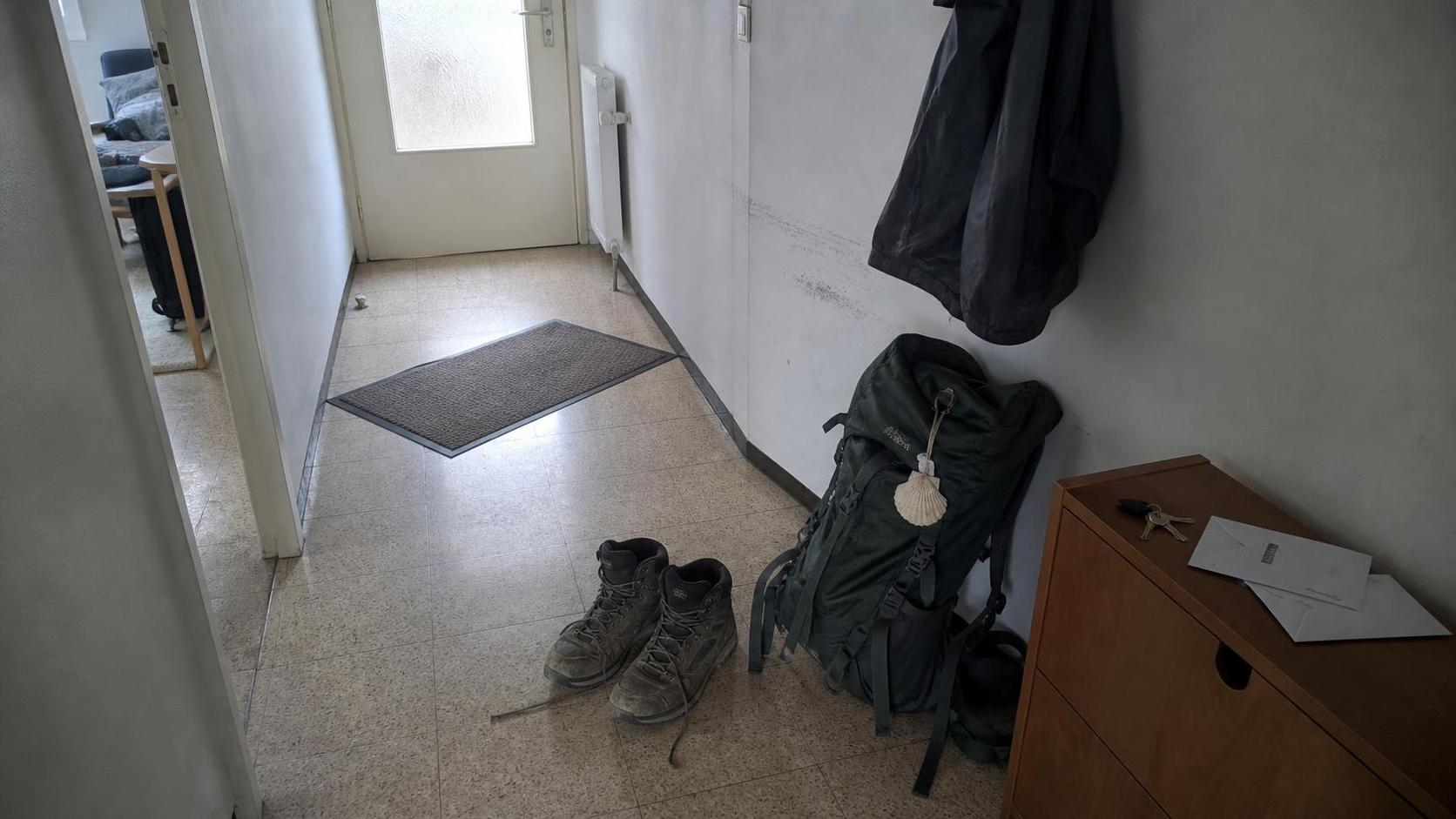
Three weeks of flatness after a long Camino is common, and on its own it is not a sign of depression. The difference is shape more than intensity. The post Camino blues come and go, and they lift when you walk, talk to someone you walked with, or plan something. Depression sits on you most of the day, nearly every day, and nothing shifts it. The UK's NHS puts the line at two weeks of that: see a GP if it lasts longer.
The morning after the last stage
On the Camino Francés you walked something like 780 kilometres, most days 20 to 25 of them, for four or five weeks. Every morning had one job and a yellow arrow telling you where to do it. Then it stops. You wake at home, your legs still expecting a day's walking, and the only thing waiting is an inbox. Nobody asks where you are walking to tomorrow. Pilgrims describe a familiar mix: tiredness, broken sleep, a pull back to the trail, and a low mood with no obvious target.
The lift test
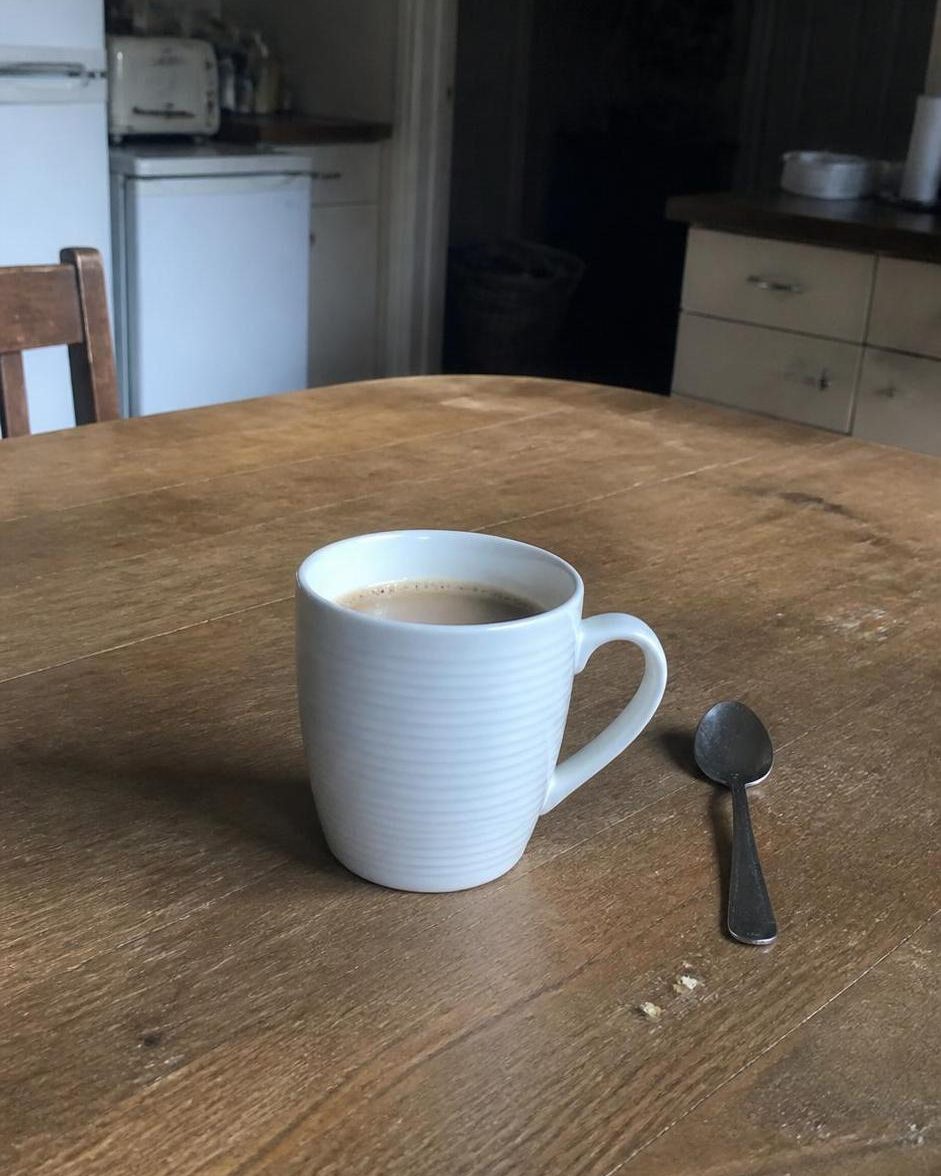
Ask one question: does anything make it better, even for an afternoon? A long walk, a message from someone you met in Pamplona, booking a weekend away. If yes, you are dealing with the end of something good, and it behaves like grief: it comes in waves and it fades.
When three weeks is a signal, not a phase
It is a signal when the answer is no: the low is there from waking to sleeping, nothing you used to enjoy reaches you, and sleep and appetite have gone wrong and stayed wrong. That is worth a doctor's appointment, and booking one is not an overreaction.
The only Camino study that followed pilgrims home is the Ultreya study, led by psychologist Albert Feliu-Soler and published in the Journal of Happiness Studies in 2024. It compared 444 pilgrims with 124 people taking an ordinary holiday, measured both groups before and after, and checked the pilgrims again three months later. Pilgrims gained more in positive affect and life satisfaction and lost more anxiety, depression and perceived stress than the holiday group, and most measures were still improved at three months.
A second paper, by Brumec and Roszak in the Journal of Religion and Health (2024), surveyed 501 pilgrims about changes they carried home, such as a stronger sense of connection and less attachment to possessions.
Why measured improvement and a real low can both be true
Neither study measures the low itself. We found no published research on how many pilgrims feel flat after coming home, or for how long. Our guide to the post-Camino experience says the same, and refuses to repeat the confident timelines that circulate online. So two things hold at once. On average, pilgrims come home better off and stay that way for months. And many of them still have a hard few weeks, because losing a daily purpose, a body that was working all day and a community that formed in a week is a real loss, even when the walk did you good.
No study gives a timeline, so treat this as the pattern pilgrims describe rather than a rule. On the largest Camino forum, returning walkers report keeping the Camino state of mind for a few weeks, an itch that came back after four or five, and giving up after two months and planning the next one. General research on post-holiday blues puts the ordinary dip at a few days to two weeks, worst in the first days back, and notes that a longer break and a sharper contrast with daily life make it linger. A month of walking is about as long and as different as a trip gets.
Week one to two: the body
The first days are physical. Your body still expects 20 kilometres a day. Sleep is off, appetite swings, and you may feel tired and restless at once. Daily movement helps most here.
Week three to six: the meaning
The question changes from "what do I do all day" to "what was that for". The trail community has scattered and the people at home have heard the stories. This is the stretch most pilgrims mean by the post Camino blues.
Month three and beyond: what stays
By month three many pilgrims describe pangs rather than a constant low: a smell, a song, a yellow arrow painted on a street at home. That is also roughly where the Ultreya study found its gains still holding.
The blues are a reaction with a cause you can name. "Post camino depression" is a phrase pilgrims use loosely for the same feeling, while clinical depression is a diagnosis only a doctor makes. The table is a way to place yourself, not to diagnose yourself.
| Signal | Post-Camino blues | Post-holiday blues | Clinical depression | What to do |
|---|---|---|---|---|
| How it starts | Days after the last stage or the flight home | First days back at work | May have started before the trip, or has no clear cause | Note when it began |
| Does anything lift it? | Yes: a walk, a pilgrim friend, a plan | Yes: routine, sleep, a weekend | Little or nothing | Try the lift test for a week |
| How much of the day | Comes and goes | Comes and goes | Most of the day, nearly every day | Keep a rough note |
| Sleep and appetite | Off at first, settling | Briefly off | Persistently changed | Watch for a trend |
| Typical length | A few weeks to a couple of months, by pilgrims' accounts | A few days to two weeks | Longer than two weeks, not easing | All-day low over two weeks: see a doctor |
Signs that mean book an appointment
- The low fills most of the day, nearly every day, for more than two weeks.
- Nothing lifts it, including the things that used to.
- Sleep, appetite or energy have changed and are not settling.
- It is getting in the way of work, sleep or the people around you.
- You have thoughts of harming yourself. That one does not wait: call your local emergency number or a crisis line today.
The drop starts in Santiago, not at home, so plan the landing before you arrive. Book two nights in Santiago after your last stage, not one, and keep the last morning slow. Collect the Compostela on the first afternoon so the second day has no errands in it. Our guide to the days after you reach Santiago covers the office queue, the Mass and the trip home that fill them.
Returning home after the camino: build a two-day buffer
Leave at least a day, ideally two, between landing and going back to work. Unpack, wash everything, sleep, walk. Walking on to the coast is the other common way to soften the ending: continuing to Finisterre and Muxía adds three or four walking days and turns a hard stop into a slower one. It postpones the drop rather than removing it, so plan the week home either way.
Two diary entries that do most of the work
Before you fly, put two things in your calendar. One long walk on your first weekend home, anywhere, for at least an hour. And one message or call to someone you walked with, on the first Wednesday. Those two entries keep the daily movement and one thread of the trail community alive, which is what pilgrims most often say helps.
Most people at home will listen for about five minutes, and that is not rejection. Nobody at the bus stop knows you walked 780 kilometres, and nobody can take in a month in one sitting.
One story, not the whole month
Pick one story: the morning in the fog, the stranger who fixed your blister, the day you nearly quit. Then name one thing you want to change at home, like walking to work. People engage with a single scene and a single request far better than with a chronology. Save the long version for the people you walked with.
Help outside the United States
988 is the US Suicide and Crisis Lifeline and does nothing for a pilgrim in Leeds, Lyon or Seoul. Your own doctor or your country's health line is the right first stop nearly everywhere. In a crisis:
- Anywhere: Find A Helpline lists free, confidential helplines in more than 175 countries, searchable by country and topic.
- European Union: 112 reaches emergency services in every member state.
- Spain: 024, the national suicide-prevention line, free and open around the clock. Useful if the low catches you in Santiago.
- Germany: TelefonSeelsorge, 0800 111 0 111 or 0800 111 0 222, free and anonymous, day and night.
- United Kingdom and Ireland: Samaritans, 116 123, free at any hour.
- United States: 988, by call or text.
FAQ
What can I actually do in my first week home from the Camino?
Three things. Walk once, anywhere, for at least an hour. Message one person you met on the trail. Do not book a full calendar. Everything else can wait. The aim in week one is to keep some daily movement and one thread of the trail community alive, not to process the whole month.
Does any research back up the post-Camino blues, or is it just anecdote?
Partly. Research measures the upside well: the Ultreya study followed 444 pilgrims and found most wellbeing gains still in place three months after they got home. No study has measured the low itself, so how common it is and how long it lasts remain pilgrims' own accounts. General post-holiday research is the closest evidence, and it says longer, more different trips linger longer.
Do I need another Camino to fix this?
No, and booking one to escape the feeling usually postpones it. Most of what helps costs nothing: a weekly walk, one message to a pilgrim friend, one habit from the trail kept at home. Plan a second Camino when you want to walk, not when you want to stop feeling flat.
My family listened for five minutes and moved on. Is that normal?
Yes, and it is not rejection. Nobody at home walked it with you. Give them one story rather than the month, and one concrete thing you want to change at home. People engage with a single scene and a single request far better than with a chronology.
Where do I get help if I am not in the United States?
Start with your own doctor or your country's health line. Find A Helpline at findahelpline.com lists free, confidential services in more than 175 countries. In the EU, 112 reaches emergency services; Spain has the 024 line, Germany the TelefonSeelsorge on 0800 111 0 111, and the UK and Ireland Samaritans on 116 123.
Is it worth walking on to Finisterre to soften the ending?
It can help, because it turns a hard stop into a slower one, and the coast gives the walk an ending you choose. It is three to four more walking days and money you may not have. It postpones the drop rather than removing it, so plan the week home either way.
External citations
Feliu-Soler, Royuela-Colomer et al., 'Assessing the Impact of the Way of Saint James on Psychological Distress and Subjective Well-being: The Ultreya Study', Journal of Happiness Studies 25 (2024)
doi.org/10.1007/s10902-024-00820-0The only Camino study with a holiday control group and a three-month follow-up: 444 pilgrims against 124 holidaymakers, with most gains still measurable three months after the walk.
Brumec and Roszak, 'Exploring the Transformative Aftereffects of Religious Experiences on Pilgrims Along the Camino de Santiago in Spain', Journal of Religion and Health 63 (2024): 4876–4901
doi.org/10.1007/s10943-024-02127-zA survey of 501 pilgrims on the changes they carried home after the walk.
NHS, symptoms of depression in adults
www.nhs.uk/mental-health/conditions/depression-in-adults/symptomsThe two-week rule: see a GP if symptoms of depression last most of the day, every day, for more than two weeks.
Talkiatry, post-vacation depression
www.talkiatry.com/blog/post-vacation-holiday-depressionHow long the ordinary post-holiday dip lasts, and why a longer break and a sharper contrast with daily life make it linger.
Camino de Santiago Forum, post-Camino threads
www.caminodesantiago.me/community/threads/post-camino-can-things-ever-be-normal-again.41617Returning pilgrims describing, in their own words, how long the low lasted for them.
Find A Helpline
findahelpline.comFree, confidential helplines in more than 175 countries, searchable by country.
Ministerio de Sanidad, 024 line
www.sanidad.gob.es/linea024/home.htmSpain's free, confidential suicide-prevention line, open 24 hours a day.
La Compostela del Lector
You walked this guide to Santiago.
All 771 km, 0 stages, stamped end to end.