
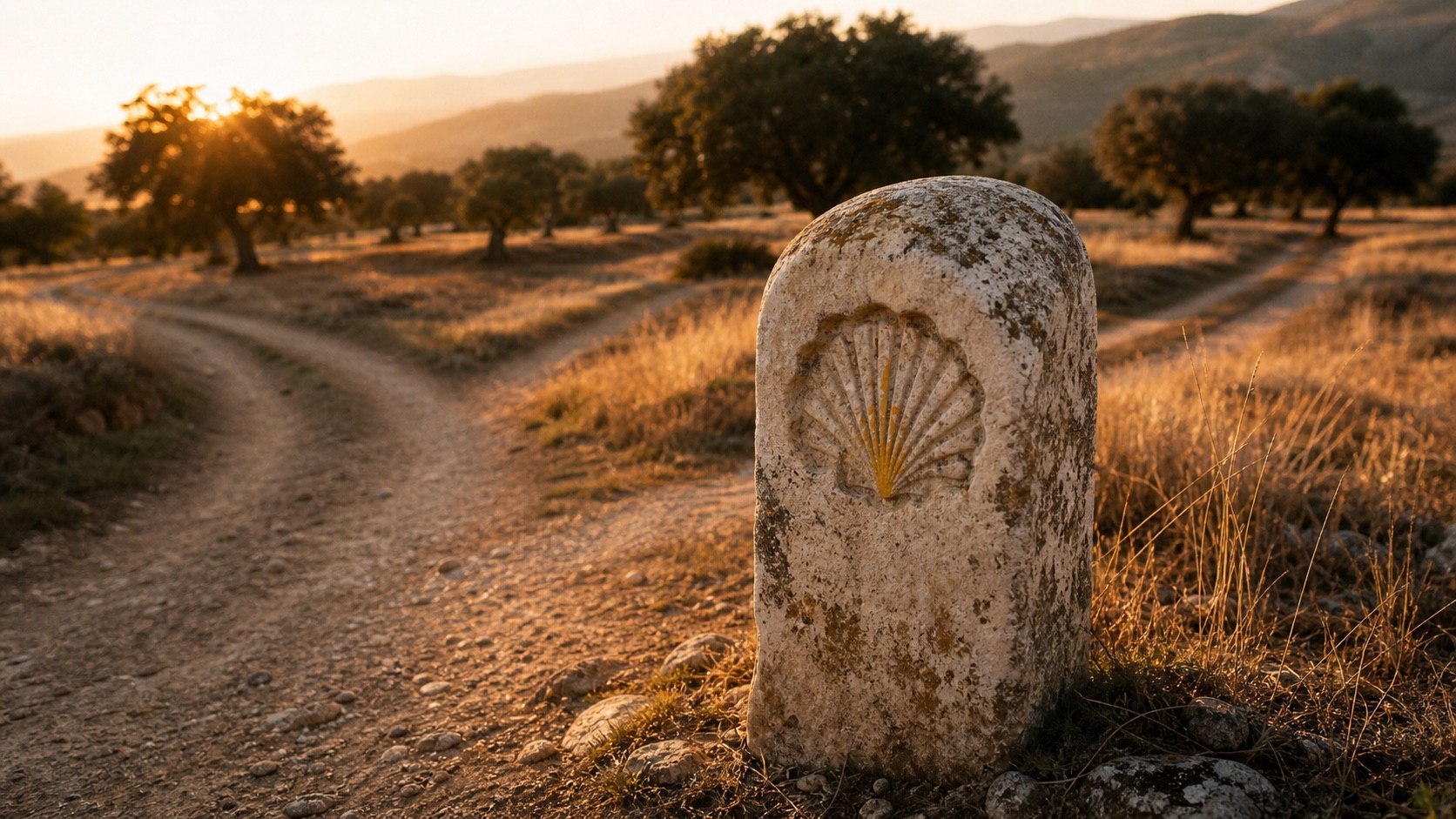
Start with three constraints: the days you can actually walk, your honest fitness baseline, and the language support you will need on trail. Map each constraint to one of the seven main routes, then choose a start point that fits the days available. The Camino Francés from Sarria is the path of least friction for most first-time pilgrims, but it is not the only sensible answer.
The seven main routes that account for almost all Compostela-earning pilgrims are the Francés, the Portugués Central, the Portugués Coastal, the Norte, the Primitivo, the Inglés, and the Vía de la Plata. They range from 119 km to over 1,000 km. Each trades something for something else: more company on the Francés, more solitude on the Plata, more service density on the Galician stretches than anywhere else on the network.
If you have not picked a total trip length yet, our planning pillar guide on how to plan your first Camino de Santiago covers the sequence (dates, credential, training, budget) that this article's route choice sits inside. The companion spoke on Camino routes and distances goes a layer deeper on each route once you have narrowed to two or three.
A useful Camino route comparison weighs four numbers per route: total kilometres, typical days at a beginner pace, how dense the services feel between stops, and whether the final 100 km on that route qualifies for the Compostela. By those numbers the Francés has the densest services, the Inglés the shortest qualifying distance from Ferrol, and the Norte and Primitivo the toughest terrain. The table below makes the trade-offs concrete.
| Route | Total km | Typical days | Service density between stops | Recommended fitness baseline | Compostela-eligible final 100 km |
|---|---|---|---|---|---|
| Francés | ~790 | 30–35 | Dense, especially from Sarria | Comfortable walking 20–25 km/day | Yes, Sarria → Santiago |
| Portugués Central | ~620 | 25–30 | Dense after Tui | Comfortable walking 20–25 km/day | Yes, Tui → Santiago |
| Portugués Coastal | ~280 | 12–14 | Moderate, denser near Porto | Comfortable walking 20 km/day | Yes, when merged with Central |
| Norte | ~825 | 32–36 | Lower, longer gaps in summer | Confident hill walker | Yes, final stretch into Arzúa |
| Primitivo | ~320 | 13–15 | Sparse on mountain stages | Confident hiker, mountain-ready | Yes, when merged with Francés |
| Inglés | 119 | 5–7 | Moderate, rural feel | Comfortable walking 20–25 km/day | Yes, Ferrol → Santiago |
| Vía de la Plata | 1,000+ | 45–50 | Sparsest of the seven | Experienced long-distance walker | Yes, Ourense → Santiago |
A note on the Inglés: 119 km is the Ferrol start. The A Coruña start is roughly 75 km, which is below the 100 km on-foot threshold and does not earn a Compostela on its own. First-timers who want the certificate should start in Ferrol.
Available days map to start points more cleanly than fitness does. Pick your number of walking days first, then back into a start point on a route that fits.
- Five to seven walking days. Sarria on the Francés, Tui on the Portugués Central, or Ferrol on the Inglés. All three clear the 100 km on-foot requirement for the Compostela and finish in Santiago in a week.
- Two weeks of walking. León or Ponferrada on the Francés, Porto on the Portugués Coastal, or Oviedo for a short Primitivo finish that merges into the Francés. Two weeks is the sweet spot for first-timers who want more than a Sarria sprint.
- Four to five weeks of walking. Saint-Jean-Pied-de-Port for the full Francés, Lisbon for the long Portugués Central, or Irún for the full Norte. These are committing walks; budget for them with a realistic 30-day cost plan before you book a flight.
Walk-up bed availability does not scale with route length. The Sarria-to-Santiago final stretch is the densest pilgrim corridor on any route, and the one stage where bed pressure deserves its own plan. Our spoke on whether to book albergues in advance breaks down which nights to pre-book and which can be walked up cold.
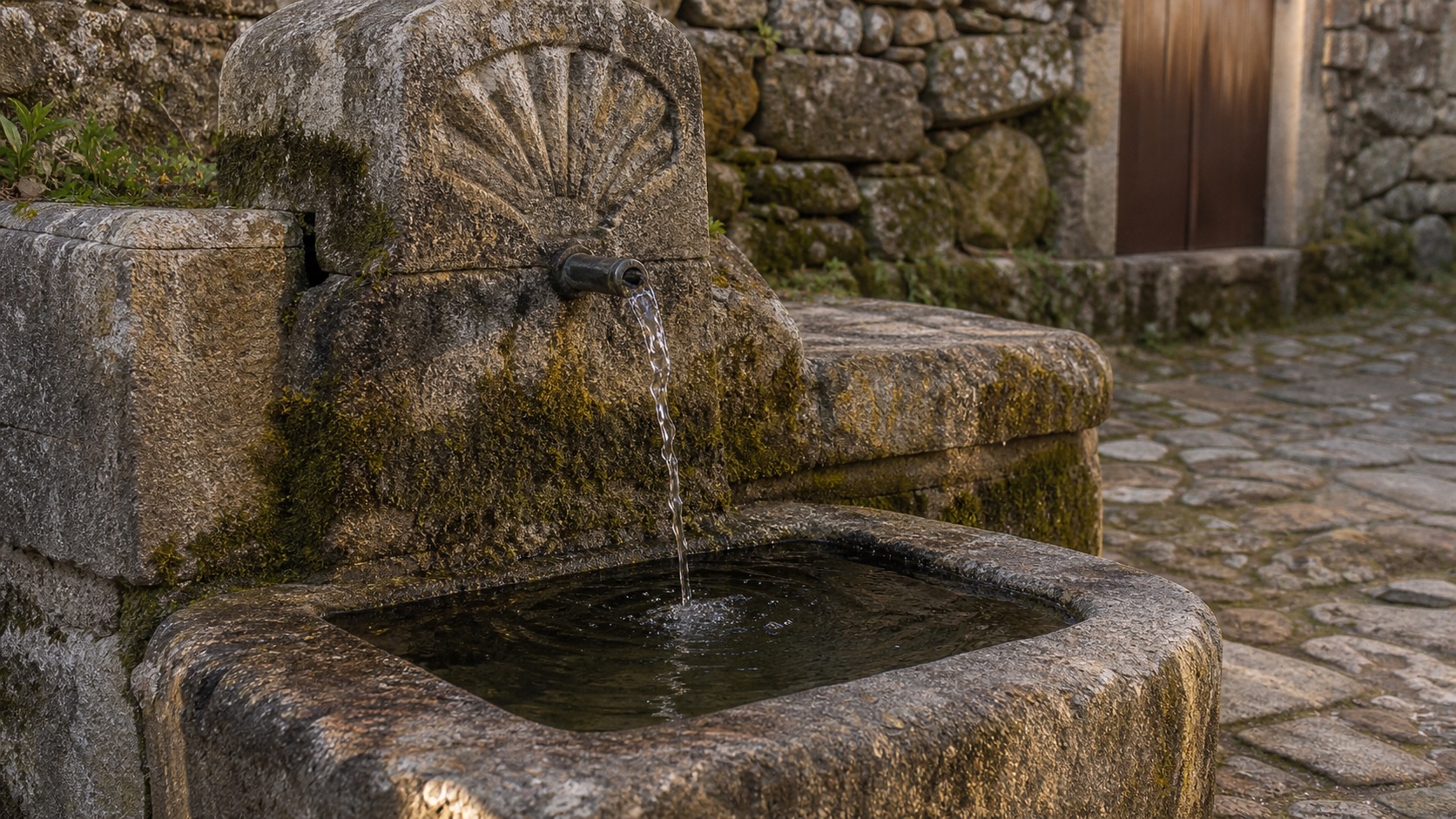
Beginner-friendly usually means short stretches between services rather than short total distance. The Francés has a café, fountain, or albergue every few kilometres from Sarria onward, with regular pharmacies and ATMs in the small towns. The Portugués Central tightens to a similar pattern after Tui. The Norte and Primitivo are scenic but can stretch the gap between guaranteed water and food in summer, which is where first-time pilgrims without long-distance experience get caught out.
The official Galician tourism office publishes service maps and elevation profiles for the most-walked Galician sections (Sarria to Santiago on the Francés, Tui to Santiago on the Portugués, Ferrol to Santiago on the Inglés). Cross-checking those before you commit to a start point is faster than reading ten trail blogs.
Most route advice quietly assumes fluent English. On the Francés you will find Korean, Japanese, Spanish, Portuguese, German, French, and Italian pilgrims at almost every albergue, plus hospitaleros used to gesture-based exchanges. The Inglés and Primitivo skew more local Spanish. Language support shifts more with where you start than which route name you walk under.
For pilgrims flying in from Korea or Japan: the Francés from Sarria has the largest established Korean and Japanese pilgrim presence, partly because both communities have long-running guidebooks and tour operators built around exactly that section. The shared route, shared dorms, and shared evening meals make basic English or basic Spanish work even when neither is fluent.
The Pilgrim Office issues a Compostela when you walk at least the final 100 km on foot in one continuous push, with two credential stamps per day in that final 100 km. Sectional walks before the qualifying 100 km are fine. You can walk Saint-Jean to León one year and finish the rest later, across two or three more trips, and the credential history stays valid. Skipping stages inside the final 100 km invalidates the Compostela.
The mechanics live with the credential itself — a future spoke on getting your pilgrim credential covers how stamps get collected and verified across multiple trips. For now, the rule of thumb is: continuous final 100 km, two stamps per day in that stretch, on foot.
The classic errors are predictable.
The "photogenic route first" trap. Picking the Norte for the ocean photos and then realising the elevation hurts in week one. Walk the route your knees can handle and add scenery as a bonus.
The Pyrenees timing trap. The Napoleon route over the Pyrenees on day one of the Francés closes for winter due to snow and storm risk. A future spoke on when to walk the Camino will cover dates and weather; for now, if your start month is anywhere near November to March, plan the Valcarlos alternative or start later down the route.
The Sarria-without-a-bed trap. Starting in Sarria over Easter Week or peak August without booking the first night. The last 100 km is the densest pilgrim corridor on the network, and walk-ups on a fiesta weekend are a coin flip. Pre-book your Sarria arrival night and the night in Santiago at the minimum.
The "I'll do the full Francés" trap. Booking Saint-Jean without ever having walked four consecutive 20 km days at home. The full Francés is a month on foot. If you have not trained for it, the realistic plan is to walk León or Ponferrada to Santiago this year and come back for the front half later. The planning pillar guide covers a training ramp that makes the front-half choice a real one instead of a future fantasy.
The "Norte is empty" trap. Choosing the Norte for solitude in August, when it is actually busy with Spanish locals on their summer holiday. The Norte is quieter than the Francés overall, but August on the coast is a Spanish domestic-tourism season in its own right.
Time on trail is a function of start point and average daily distance, not the abstract how long is the Camino. At a 20-25 km beginner pace:
- Sarria to Santiago: 5–7 days
- Ferrol to Santiago (Inglés): 5–7 days
- Tui to Santiago (Portugués Central): 5–7 days
- Porto to Santiago (Portugués Coastal): 12–14 days
- León to Santiago (Francés): 12–15 days
- Oviedo to Santiago (Primitivo): 13–15 days
- Saint-Jean to Santiago (full Francés): 30–35 days
Add at least one rest day per week and a buffer day for blisters, weather, or a town you want to stay in. Pilgrims who book a flight home for the day they expect to arrive in Santiago are the ones who end up taxis-and-trains rushing the last stage.
Frequently asked questions
Do I have to walk the whole Camino or can I split it across multiple trips?
No, you do not have to walk it in one trip. You can split any Camino across multiple visits and still earn a Compostela, as long as the final 100 km is walked continuously on foot with two stamps a day. Sectional walking before the qualifying 100 km is common: pilgrims walk Saint-Jean to León one year and finish later, or stretch the full Francés across several trips over several years.
Which Camino route is the shortest?
The Camino Inglés is the shortest of the main routes, at 119 km from Ferrol. The A Coruña variant is around 75 km, below the Compostela on-foot threshold. If you have only a week and want the certificate, the two viable picks are the Inglés from Ferrol and the Francés from Sarria.
Which Camino route has the most services for first-time pilgrims?
The Camino Francés has the densest network of cafés, fountains, albergues, pharmacies, and ATMs of any route, especially in the last 200 km. The Portugués Central is a close second after Tui. The Norte and Primitivo are scenic but make beginner days harder by stretching guaranteed services on some summer stages, so first-timers without long-distance experience should stick to the Francés or the Portugués.
What is the right Camino route if I am not fluent in English?
The Francés has the broadest multilingual mix on trail, with large Korean, Japanese, German, French, Italian, Spanish, and Portuguese cohorts at most albergues. Hospitaleros are used to gesture-based exchanges. The Inglés and Primitivo are quieter and skew more local Spanish, so basic Spanish helps more on those routes. Language support shifts more with start point than with the route name.
Can I switch routes part-way through?
Yes. The major routes converge near Santiago, so you can transfer from the Norte or the Primitivo onto the Francés if a stretch is not working. Your credential keeps the stamp history regardless of which route you walked. As long as the final 100 km is continuous and stamped twice daily on a single route, the Compostela still counts.
Can you walk the Camino in 5 days?
Yes, but only the final 100 km, and only on the shorter routes. Sarria to Santiago on the Francés, Tui on the Portugués Central, and Ferrol on the Inglés all clear the 100 km on-foot minimum for the Compostela and finish in five to seven walking days. Five days means full stages of around 20 km with no rest day, so it suits a reasonably fit walker on a tight schedule. The full Camino Francés from Saint-Jean is 30–35 days and will not compress into five.
Can you walk the Camino in 7 days?
Comfortably, yes. Seven walking days is the relaxed version of a 100 km finish: Sarria on the Francés, Tui on the Portugués Central, and Ferrol on the Inglés all reach Santiago in five to seven days, so seven lets you shorten a stage or slot in a rest day. For more trail, start further back: O Cebreiro on the Francés is roughly 155 km and still lands in about a week for a steady walker.
Can you walk the Camino in 10 days?
Yes, and ten days opens up more route. At a 20-25 km beginner pace, ten walking days covers roughly 200–250 km. Ponferrada to Santiago on the Francés (about 200 km) sits comfortably in that window, and the full Camino Portugués from Porto (around 280 km, usually 12–14 days) is reachable only at a brisk, full-stage pace with no rest days. León to Santiago (about 300 km) is the one not to squeeze into ten; it is a 12–15 day stretch.
How long is the Camino de Santiago in total?
There is no single answer because there is no single route. The Francés is roughly 790 km, the Portugués Central roughly 620 km, the Norte roughly 825 km, the Primitivo roughly 320 km, the Inglés 119 km from Ferrol, and the Vía de la Plata over 1,000 km. Most first-timers pick a number of days first, then back into a start point on whichever route fits.
External citations
Oficina del Peregrino — official Santiago de Compostela pilgrim office statistics
oficinadelperegrino.com/en/statisticsSource of record for annual pilgrim counts by route and start point, including the dominant share of the Francés and the popularity of Sarria as a starting town. Used to anchor the route-mix and start-point sections.
Catedral de Santiago — Compostela rules
catedraldesantiago.esThe Pilgrim Office's published criteria for the Compostela: the final 100 km on foot, walked continuously, with two stamps per day in that stretch. Anchors the sectional-walks and qualifying-distance sections.
Xunta de Galicia tourism office — Camino route data
www.turismo.galGovernment-published service maps and elevation profiles for the Galician sections most first-time pilgrims walk: Sarria to Santiago on the Francés, Tui to Santiago on the Portugués, and Ferrol to Santiago on the Inglés.
La Compostela del Lector
You walked this guide to Santiago.
All 771 km, 0 stages, stamped end to end.